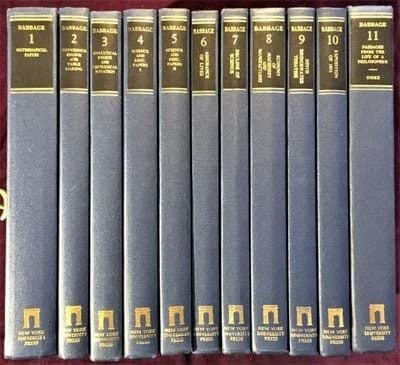
On the Economy of Machinery and ManufacturesBabbage, Charles
ReligionComparative
On the Economy of Machinery and Manufactures
Babbage, Charles
Machinery; Manufactures
374. Wherever the workmen are paid in goods, or are compelled
to purchase at the master's shop, much injustice is done to them,
and great misery results from it. Whatever may have been the
intentions of the master in such cases, the real effect is, to
deceive the workman as to the amount he receives in exchange for
his labour. Now, the principles on which the happiness of that
class of society depends, are difficult enough to be understood,
even by those who are blessed with far better opportunities of
investigating them: and the importance of their being well
acquainted with those principles which relate to themselves, is
of more vital consequence to workmen, than to many other classes.
It is therefore highly desirable to assist them in comprehending
the position in which they are placed, by rendering all the
relations in which they stand to each other, and to their
employers, as simple as possible. Workmen should be paid entirely
in money; their work should be measured by some unbiassed, some
unerring piece of mechanism; the time during which they are
employed should be defined, and punctually adhered to. The
payments they make to their benefit societies should be fixed on
such just principles, as not to require extraordinary
contributions. In short, the object of all who wish to promote
their happiness should be, to give them, in the simplest form,
the means of knowing beforehand, the sum they are likely to
acquire by their labour, and the money they will be obliged to
expend for their support: thus putting before them, in the
clearest light, the certain result of persevering industry.
375. The cruelty which is inflicted on the workman by the
payment of his wages in goods, is often very severe. The little
purchases necessary for the comfort of his wife and children,
perhaps the medicines he occasionally requires for them in
illness, must all be made through the medium of barter; and he is
obliged to waste his time in arranging an exchange, in which the
goods which he has been compelled to accept for his labour are
invariably taken at a lower price than that at which his master
charged them to him. The father of a family perhaps, writhing
under the agonies of the toothache, is obliged to make his hasty
bargain with the village surgeon, before he will remove the cause
of his pain; or the disconsolate mother is compelled to sacrifice
her depreciated goods in exchange for the last receptacle of her
departed offspring. The subjoined evidence from the Report of the
Committee of the House of Commons on Framework Knitters'
Petitions, shows that these are not exaggerated statements.
Public-domain text, read in full here on John Shaqi.
Reviews
Reviews
No reviews yet
Be the first to share your thoughts on this work.
Elsewhere in the archive
Join the Discussion
Join the discussion
Sign in to leave a comment or review.
Sign InorCreate an account