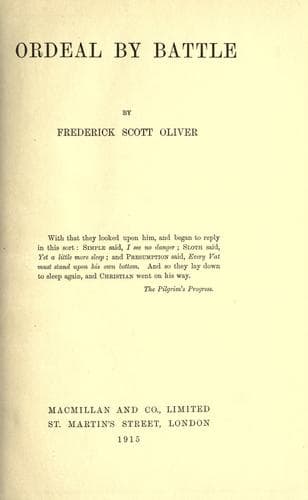
Draft -- Great Britain; Great Britain -- Defenses; World War, 1914-1918
While at times naval policy, and even foreign policy, had for years
together been removed out of the region of purely party criticism, army
policy had ever remained embarrassed by an evil tradition. From the
time of John Churchill, Duke of Marlborough, to the time of
Field-Marshal Sir John French--from a date, that is, only a few years
after our modern Parliamentary system was inaugurated by the 'Glorious
Revolution,' down to the present day--the characteristic of almost
every opposition with regard to this matter, had been factiousness, and
that of {313} almost every Government evasion. Neither the one side
nor the other had ever seemed able to approach this ill-fated topic
with courage or sincerity, or to view it with steady constancy from the
standpoint of the national interest.
[Sidenote: THE BLOOD TAXES]
For several years past the country had been watching a conspicuous
example of this ingrained habit of manoeuvring round the Army in order
to obtain party advantage. From 1912 onwards, until more interesting
perplexities provided a distraction, a great part of the Liberal press
and party had been actively engaged in the attempt to fix the Unionist
party with responsibility for the proposals of the National Service
League. The Opposition, it is hardly necessary to record, were
innocent of this charge--criminally innocent; but it was nevertheless
regarded as good party business to load them with the odium of
'conscription.' The 'blood-taxes,' as it was pointed out by one
particularly zealous journal, would be no less useful than the
'food-taxes' as an 'election cry,' which at this time--more than ever
before--appeared to have become the be-all and end-all of party
activities.
It was obvious to the meanest capacity that these industrious
politicians were not nearly so much concerned with the demerits, real
or supposed, of National Service, as with making their opponents as
unpopular as possible. In such an atmosphere of prejudice it would
have required great courage and determination in a statesman to seek
out and proclaim the true way to security, were it national service or
anything else which entailed a sacrifice.
Was it wonderful that when people examined the signs of the times in
the early part of 1913, {314} they should have found themselves
oppressed by feelings of doubt and insecurity? A huge German military
increase; a desperate French effort in reply; war loans (for they were
nothing else) on a vast scale in both countries--what was the meaning
of it all? To what extent was British safety jeopardised thereby?
Public-domain text, read in full here on John Shaqi.
Reviews
Reviews
No reviews yet
Be the first to share your thoughts on this work.
Elsewhere in the archive
Join the Discussion
Join the discussion
Sign in to leave a comment or review.
Sign InorCreate an account