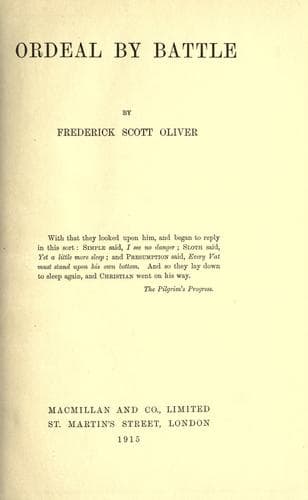
Draft -- Great Britain; Great Britain -- Defenses; World War, 1914-1918
Moreover, it was obviously necessary to look an immense way ahead,
especially as regards munitions of war; to aid with loans, and
encourage with orders, firms able and willing to make what was
required. It was essential that makers of arms and supplies should be
stimulated to undertake vast increases of their staff and plant.
Before the battle of the Marne was ended it was known, only too well,
that every nation in Europe--with the single exception of Germany--had
grossly underestimated the expenditure of artillery ammunition under
conditions of modern warfare. It was of the most immediate urgency to
concert with our Allies, and with our manufacturers, in order to set
this trouble right. It was as necessary for the Allies to organise
their resources as it was for them to organise their armies. The
second, indeed, was impossible without the first, as Germany well knew,
and in her own case had already practised.
Finally, there was the problem--half industrial, half political--of
labour; its hours, conditions, and remuneration. Without the utmost
vigilance and {360} sympathy, without a constant inspiration of duty,
without political leadership which appealed to the imagination and
heart of the people, there were bound to be endless troubles and
confusion; there were bound to be disputes, quarrels, stoppages, and
strikes.
The prices of certain munitions and materials were almost anything the
makers liked to name. Money was flying about, and everybody was aware
of it. Human nature was sorely tempted. The future was anxious and
uncertain. People dependent for a living on their own exertions, were
beset with a dangerous inclination to hold out their pitchers, in the
hopes of catching some portion of the golden shower while it lasted.
The idea that workmen were, on the average, any greedier than their
masters is only held by persons who have little knowledge of the facts.
Cost of living had risen rapidly; this might have been foreseen from
the beginning, as well as the dangers which it contained.
In such circumstances as these the baser appetites of mankind are
always apt to break loose and gain the upper hand, unless there is a
firm leadership of the nation. That is where the statesman should come
in, exercising a sagacious control upon the whole organisation of
industry; impressing on masters the need for patience and sympathy; on
their men the need for moderation; on all the need for sacrifices.
During the months of February, March, and April 1915 there was a loud
outcry, led by a member of the Government, deploring the lack of
munitions of war, and attributing the deficiency to a want of industry
and energy on the part of a {361} section of the working classes.
Their frequent abstentions were condemned, and drunkenness was alleged
to have been, in many cases, a contributory cause.
[Sidenote: MINISTERIAL INCONSISTENCIES]
Public-domain text, read in full here on John Shaqi.
Reviews
Reviews
No reviews yet
Be the first to share your thoughts on this work.
Elsewhere in the archive
Join the Discussion
Join the discussion
Sign in to leave a comment or review.
Sign InorCreate an account