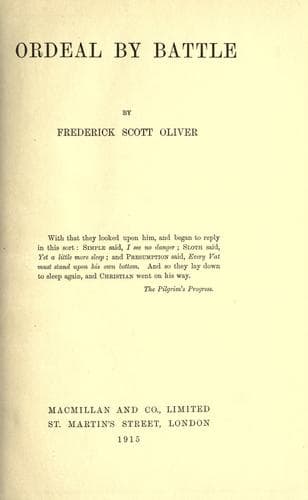
Draft -- Great Britain; Great Britain -- Defenses; World War, 1914-1918
We cannot forecast with certainty the issue of the present war, but
hope nevertheless refuses to be bound. There is a false hope and a
true one. There may be consolation for certain minds, but there is no
safety for the nation, in the simple faith that democracy is in its
nature invincible. Democracy is by no means invincible. On the
contrary, it fights at a disadvantage, both by reason of its
inferiority in central control, and because it shrinks from
ruthlessness. Nevertheless we may believe as firmly as those who hold
this other opinion that in the end it will conquer. Before this can
happen it must find a leader who is worthy of its trust.
Since August 1914 we have learned many things from experience which we
previously refused to credit upon any human authority. We are not
altogether done with the past; for it contains lessons and
warnings--about men as well as things--which it would be wasteful to
forget. But our main concern is with the present. And we are also
treading very {436} close on the heels of the future, when--as we
trust--the resistance of our enemies will be beginning to flag; when
the war will be drawing to an end; afterwards through anxious years
(how many we cannot guess) when the war has ended, and when the object
of our policy will be to keep the peace which has been so dearly bought.
Lord Roberts was right in his forecast of the danger; nor was he less
right in his perception of England's military weakness and general
unpreparedness for war. But was he also right as to the principle of
the remedy which he proposed? And even if he were right as things
stood when he uttered his warnings, is his former counsel still right
in our present circumstances, and as we look forward into the future?
Is it now necessary for us to accept in practice what has always been
admitted in the vague region of theory--that an obligation lies upon
every citizen, during the vigour of his age, to place his services, and
if need be his life, at the disposal of that state under whose shelter
he and all those who are most dear to him have lived?
[Sidenote: THE PEOPLE WILL NOT FLINCH]
There is always danger in treating a free people like children; in
humouring them, and coaxing them, and wheedling them with half-truths;
in asking for something less than is really needed, from fear that to
ask for the whole would alarm them too much; with the foolish hope that
when the first demand has been granted it will then be easy enough to
make them understand how much more is still necessary to complete the
fabric of security; that having deceived them once, it will be all the
easier to deceive them again.
Public-domain text, read in full here on John Shaqi.
Reviews
Reviews
No reviews yet
Be the first to share your thoughts on this work.
Elsewhere in the archive
Join the Discussion
Join the discussion
Sign in to leave a comment or review.
Sign InorCreate an account