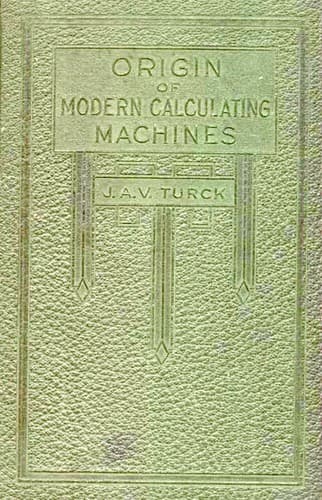
Origin of modern calculating machinesTurck, J. A. V.
History
Origin of modern calculating machines
Turck, J. A. V.
Calculators
The next feature in the recording machine Art which shows a new
operative feature, that may be considered an improvement, is
cross tabulating. It consisted of means for horizontal tabulating or
recording across a sheet of paper as well as in vertical columns. While
this feature was for special use, it served to broaden the usefulness
of the recorder in bringing together classified balances by dates with
cross-added totals, and many other similar uses. This feature was the
invention of D. E. Felt, who applied for a patent April 29, 1901, which
was issued October 21, 1902; the patent number is 711,407.
[Sidenote: _Item stop_]
Another special feature serving to broaden the usefulness of the
recording-adder was invented by Felt, and may be found in patent No.
780,272, applied for March 30, 1901, and issued January 17, 1905. This
feature was a device which controlled the printing of a predetermined
number of items which could be set by the operator, and which, when the
predetermined number had been printed, would lock the mechanism against
further action until the paper was shifted to print a new column.
[Sidenote: _Motor drive_]
Prior to May 9, 1901, there is no record of any recording-adder having
been operated by electric motor drive. But on that date Frank C. Rinche
applied for a patent showing such a combination with the recorder,
which became commercially known as the Universal Accountant. The
patent, No. 726,803, was issued April 28, 1903, and is the first of a
series issued to Rinche on various combinations of mechanical driving
connections.
[Sidenote: _Distinguishing marks for clear, totals and sub-totals_]
A feature common to recording of added columns of numerical items is
the distinguishing characters for clear, sub-totals and totals by the
use of letters, stars and other marks. The first patent on anything
of this nature that has come into general use was applied for June 9,
1903, by A. Macauley, and was issued June 12, 1906. This patent is No.
823,474, and shown connected with the Burroughs recorder to register
with a star when the first item is printed if the machine is clear and
when a total is printing. Provision was also made for printing an S
when a sub-total was printed.
[Sidenote: _Adding cut-out_]
The use of recording-adders is often applied when it is desired to
record dates along with tabulating added columns of recorded items.
Of course there is no use of adding the dates together, and again
if they were allowed to be added to the totals an erroneous total
of the columns added may result under certain conditions. Means for
automatically cutting out additions at certain positions of the paper
carriage in cross-line tabulating was devised by H. C. Peters, and a
patent showing such combination operative on the Burroughs recorder was
applied for by him May 12, 1904. The patent, No. 1,028,133, was issued
June 4, 1912.
[Sidenote: _Self-correcting keyboard_]
Public-domain text, read in full here on John Shaqi.
Reviews
Reviews
No reviews yet
Be the first to share your thoughts on this work.
Elsewhere in the archive
Join the Discussion
Join the discussion
Sign in to leave a comment or review.
Sign InorCreate an account