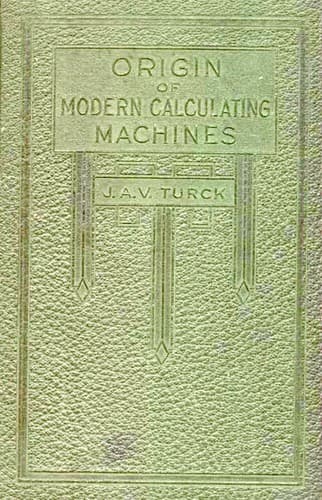
Origin of modern calculating machinesTurck, J. A. V.
History
Origin of modern calculating machines
Turck, J. A. V.
Calculators
TYPES OF ANCIENT AND MODERN MACHINES Page
General knowledge lacking 5
Key-driven machine, first of the modern machines 6
Recording, the primary feature of adding machines that print 7
Validity and priority of invention 8
Description of Pascal’s invention 11
Constructional features of the Pascal machine 12
Increased capacity of modern calculator 13
Patent office a repository of ineffectual efforts 14
THE EARLY KEY-DRIVEN ART
First attempt to use depressable keys for adding was
made in America 17
Description of Parmelee machine 18
Foreign digit adders 18
Single-digit adders lack capacity 19
Some early U. S. patents on single-digit adding machines 20
Calculating machines in use abroad for centuries 21
First key-driven machines no improvement to the Art 21
Description of the Hill machine 22
Hill machine at National Museum 25
Inoperativeness of Hill machine 25
High speed of key drive 26
Camera slow compared with carry of the tens 26
Hill machine merely adding mechanism, incomplete as
operative machine 29
Chapin and Stark patents 29
Description of Chapin machine 29
Inoperativeness of Chapin machine 30
Description of Stark machine 33
Inoperativeness of Stark machine 37
Nine keys common to a plurality of orders 37
Description of Robjohn machine 38
First control for a carried numeral wheel 41
Description of Bouchet machine 42
Bouchet machine marketed 43
Misuse of the term “Calculating Machine” 43
Description of Spalding machine 47
Prime actuation of a carried wheel impossible in the
Spalding machine 49
Public-domain text, read in full here on John Shaqi.
Reviews
Reviews
No reviews yet
Be the first to share your thoughts on this work.
Elsewhere in the archive
Join the Discussion
Join the discussion
Sign in to leave a comment or review.
Sign InorCreate an account