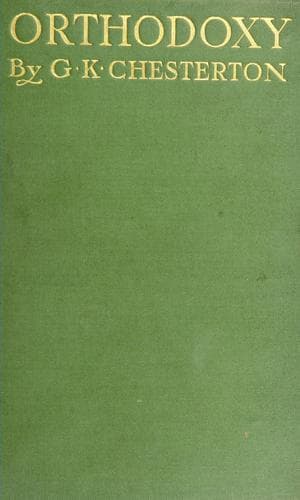
Apologetics; Chesterton, G. K. (Gilbert Keith), 1874-1936; Christianity -- Essence, genius, nature
can break out of the doomed fortress of rationalism. They think they can
escape.
But they cannot escape. This pure praise of volition ends in the same
break up and blank as the mere pursuit of logic. Exactly as complete
free thought involves the doubting of thought itself, so the acceptation
of mere "willing" really paralyzes the will. Mr. Bernard Shaw has not
perceived the real difference between the old utilitarian test of
pleasure (clumsy, of course, and easily misstated) and that which he
propounds. The real difference between the test of happiness and the
test of will is simply that the test of happiness is a test and the
other isn't. You can discuss whether a man's act in jumping over a cliff
was directed towards happiness; you cannot discuss whether it was
derived from will. Of course it was. You can praise an action by saying
that it is calculated to bring pleasure or pain to discover truth or to
save the soul. But you cannot praise an action because it shows will;
for to say that is merely to say that it is an action. By this praise of
will you cannot really choose one course as better than another. And yet
choosing one course as better than another is the very definition of the
will you are praising.
The worship of will is the negation of will. To admire mere choice is to
refuse to choose. If Mr. Bernard Shaw comes up to me and says, "Will
something," that is tantamount to saying, "I do not mind what you
will," and that is tantamount to saying, "I have no will in the matter."
You cannot admire will in general, because the essence of will is that
it is particular. A brilliant anarchist like Mr. John Davidson feels an
irritation against ordinary morality, and therefore he invokes
will--will to anything. He only wants humanity to want something. But
humanity does want something. It wants ordinary morality. He rebels
against the law and tells us to will something or anything. But we have
willed something. We have willed the law against which he rebels.
Public-domain text, read in full here on John Shaqi.
Reviews
Reviews
No reviews yet
Be the first to share your thoughts on this work.
Join the Discussion
Join the discussion
Sign in to leave a comment or review.
Sign InorCreate an account