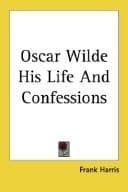
Oscar Wilde, His Life and Confessions — Volume 1Harris, Frank
History
Oscar Wilde, His Life and Confessions — Volume 1
Harris, Frank
Authors, Irish -- 19th century -- Biography; Wilde, Oscar, 1854-1900
After deliberating for a couple of hours the jury brought in a verdict which
had a certain humour in it. They awarded to Miss Travers a farthing damages
and intimated that the farthing should carry costs. In other words they rated
Miss Travers' virtue at the very lowest coin of the realm, while insisting that
Sir William Wilde should pay a couple of thousands of pounds in costs for having
seduced her.
It was generally felt that the verdict did substantial justice; though the
jury, led away by patriotic sympathy with Lady Wilde, the true "Speranza,"
had been a little hard on Miss Travers. No one doubted that Sir William Wilde
had seduced his patient. He had, it appeared, an unholy reputation, and the
girl's admission that he had accused her of being "unnaturally passionless"
was accepted as the true key of the enigma. This was why he had drawn away from
the girl, after seducing her. And it was not unnatural under the circumstances
that she should become vindictive and revengeful.
Such inferences as these, I drew from the comments of the Irish papers at the
time; but naturally I wished if possible to hear some trustworthy contemporary
on the matter. Fortunately such testimony was forthcoming.
A Fellow of Trinity, who was then a young man, embodied the best opinion of
the time in an excellent pithy letter. He wrote to me that the trial simply
established, what every one believed, that "Sir William Wilde was a pithecoid
person of extraordinary sensuality and cowardice (funking the witness-box left
him without a defender!) and that his wife was a highfalutin' pretentious
creature whose pride was as extravagant as her reputation founded on second-rate
verse-making. . . . . Even when a young woman she used to keep her rooms in
Merrion Square in semi-darkness; she laid the paint on too thick for any
ordinary light, and she gave herself besides all manner of airs."
This incisive judgment of an able and fairly impartial contemporary (As he has
died since this was written, there is no longer any reason for concealing his
name: R. Y. Tyrrell, for many years before his death Regius Professor of Greek
in Trinity College, Dublin.) corroborates, I think, the inferences which one
would naturally draw from the newspaper accounts of the trial. It seems to me
that both combine to give a realistic photograph, so to speak, of Sir William
and Lady Wilde. An artist, however, would lean to a more kindly picture.
Trying to see the personages as they saw themselves he would balance the
doctor's excessive sensuality and lack of self-control by dwelling on the fact
that his energy and perseverance and intimate adaptation to his surroundings
had brought him in middle age to the chief place in his profession, and if
Lady Wilde was abnormally vain, a verse-maker and not a poet, she was still
a talented woman of considerable reading and manifold artistic sympathies.
Such were the father and mother of Oscar Wilde.
CHAPTER II--OSCAR WILDE AS A SCHOOLBOY
Public-domain text, read in full here on John Shaqi.
Reviews
Reviews
No reviews yet
Be the first to share your thoughts on this work.
Join the Discussion
Join the discussion
Sign in to leave a comment or review.
Sign InorCreate an account