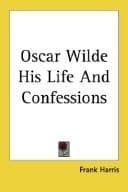
Oscar Wilde, His Life and Confessions — Volume 1Harris, Frank
History
Oscar Wilde, His Life and Confessions — Volume 1
Harris, Frank
Authors, Irish -- 19th century -- Biography; Wilde, Oscar, 1854-1900
"Non me tua fervida terrent,
Dicta, ferox: Di me terrent, et Jupiter hostis."
Even this would be only a part of the truth. Youth it seems to me should always
be prudent, for youth has much to lose: but I am come to that time of life when
a man can afford to be bold, may even dare to be himself and write the best
in him, heedless of knaves and fools or of anything this world may do. The
voyage for me is almost over: I am in sight of port: like a good shipman, I have
already sent down the lofty spars and housed the captious canvas in preparation
for the long anchorage: I have little now to fear.
And the immortals are with me in my design. Greek tragedy treated of far more
horrible and revolting themes, such as the banquet of Thyestes: and Dante did
not shrink from describing the unnatural meal of Ugolino. The best modern
critics approve my choice. "All depends on the subject," says Matthew Arnold,
talking of great literature: "choose a fitting action--a great and significant
action--penetrate yourself with the feeling of the situation: this done,
everything else will follow; for expression is subordinate and secondary."
Socrates was found guilty of corrupting the young and was put to death for
the offence. His accusation and punishment constitute surely a great and
significant action such as Matthew Arnold declared was alone of the highest
and most permanent literary value.
The action involved in the rise and ruin of Oscar Wilde is of the same kind
and of enduring interest to humanity. Critics may say that Wilde is a smaller
person than Socrates, less significant in many ways: but even if this were true,
it would not alter the artist's position; the great portraits of the world are
not of Napoleon or Dante. The differences between men are not important in
comparison with their inherent likeness. To depict the mortal so that he takes
on immortality--that is the task of the artist.
There are special reasons, too, why I should handle this story. Oscar Wilde
was a friend of mine for many years: I could not help prizing him to the very
end: he was always to me a charming, soul-animating influence. He was
dreadfully punished by men utterly his inferiors: ruined, outlawed, persecuted
till Death itself came as a deliverance. His sentence impeaches his judges.
The whole story is charged with tragic pathos and unforgettable lessons. I have
waited for more than ten years hoping that some one would write about him in
this spirit and leave me free to do other things, but nothing such as I propose
has yet appeared.
Oscar Wilde was greater as a talker, in my opinion, than as a writer, and no
fame is more quickly evanescent. If I do not tell his story and paint his
portrait, it seems unlikely that anyone else will do it.
Public-domain text, read in full here on John Shaqi.
Reviews
Reviews
No reviews yet
Be the first to share your thoughts on this work.
Join the Discussion
Join the discussion
Sign in to leave a comment or review.
Sign InorCreate an account