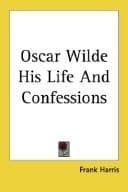
Oscar Wilde, His Life and Confessions — Volume 1Harris, Frank
History
Oscar Wilde, His Life and Confessions — Volume 1
Harris, Frank
Authors, Irish -- 19th century -- Biography; Wilde, Oscar, 1854-1900
The first part of life's voyage was over for Oscar Wilde; let us try to see him
as he saw himself at this time and let us also determine his true relations to
the world. Fortunately he has given us his own view of himself with some care.
In Foster's "Alumni Oxonienses", Oscar Wilde described himself on leaving Oxford
as a "Professor of aesthetics, and a Critic of Art"--an announcement to me at
once infinitely ludicrous and pathetic. "Ludicrous" because it betrays such
complete ignorance of life all given over to men industrious with muck-rakes:
"Gadarene swine," as Carlyle called them, "busily grubbing and grunting in
search of pignuts." "Pathetic" for it is boldly ingenuous as youth itself with
a touch of youthful conceit and exaggeration. Another eager human soul on the
threshold longing to find some suitable high work in the world, all unwitting
of the fact that ideal strivings are everywhere despised and discouraged--
jerry-built cottages for the million being the day's demand and not oratories
or palaces of art or temples for the spirit.
Not the time for a "professor of aesthetics," one would say, and assuredly
not the place. One wonders whether Zululand would not be more favourable for
such a man than England. Germany, France, and Italy have many positions in
universities, picture-galleries, museums, opera houses for lovers of the
beautiful, and above all an educated respect for artists and writers just
as they have places too for servants of Truth in chemical laboratories and
polytechnics endowed by the State with excellent results even from the
utilitarian point of view. But rich England has only a few dozen such places
in all at command and these are usually allotted with a cynical contempt for
merit; miserable anarchic England, soul-starved amid its creature comforts,
proving now by way of example to helots that man cannot live by bread alone:--
England and Oscar Wilde! the "Black Country" and "the professor of aesthetics"--
a mad world, my masters!
It is necessary for us now to face this mournful truth that in the quarrel
between these two the faults were not all on one side, mayhap England was even
further removed from the ideal than the would-be professor of aesthetics,
which fact may well give us pause and food for thought. Organic progress we
have been told; indeed, might have seen if we had eyes, evolution so-called
is from the simple to the complex; our rulers therefore should have provided
for the ever-growing complexity of modern life and modern men. The good
gardener will even make it his ambition to produce new species; our politicians,
however, will not take the trouble to give even the new species that appear a
chance of living; they are too busy, it appears, in keeping their jobs.
Public-domain text, read in full here on John Shaqi.
Reviews
Reviews
No reviews yet
Be the first to share your thoughts on this work.
Join the Discussion
Join the discussion
Sign in to leave a comment or review.
Sign InorCreate an account