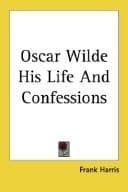
Oscar Wilde, His Life and Confessions — Volume 1Harris, Frank
History
Oscar Wilde, His Life and Confessions — Volume 1
Harris, Frank
Authors, Irish -- 19th century -- Biography; Wilde, Oscar, 1854-1900
At the same time it must be admitted he was still indefatigably intent on
bettering his mind, and in London he found more original teachers than in
Oxford, notably Morris and Whistler. Morris, though greatly overpraised during
his life, had hardly any message for the men of his time. He went for his
ideals to an imaginary past and what he taught and praised was often totally
unsuited to modern conditions. Whistler on the other hand was a modern of the
moderns, and a great artist to boot: he had not only assimilated all the newest
thought of the day, but with the alchemy of genius had transmuted it and made it
his own. Before even the de Goncourts he had admired Chinese porcelain and
Japanese prints and his own exquisite intuition strengthened by Japanese example
had shown him that his impression of life was more valuable than any mere
transcript of it. Modern art he felt should be an interpretation and not a
representment of reality, and he taught the golden rule of the artist that the
half is usually more expressive than the whole. He went about London preaching
new schemes of decoration and another Renaissance of art. Had he only been a
painter he would never have exercised an extraordinary influence; but he was a
singularly interesting appearance as well and an admirable talker gifted with
picturesque phrases and a most caustic wit.
Oscar sat at his feet and imbibed as much as he could of the new aesthetic
gospel. He even ventured to annex some of the master's most telling stories
and thus came into conflict with his teacher.
One incident may find a place here.
The art critic of "The Times", Mr. Humphry Ward, had come to see an exhibition
of Whistler's pictures. Filled with an undue sense of his own importance, he
buttonholed the master and pointing to one picture said:
"That's good, first-rate, a lovely bit of colour; but that, you know," he went
on, jerking his finger over his shoulder at another picture, "that's bad,
drawing all wrong . . . bad!"
"My dear fellow," cried Whistler, "you must never say that this painting's good
or that bad, never! Good and bad are not terms to be used by you; but say, I
like this, and I dislike that, and you'll be within your right. And now come
and have a whiskey for you're sure to like that."
Carried away by the witty fling, Oscar cried:
"I wish I had said that."
"You will, Oscar, you will," came Whistler's lightning thrust.
Public-domain text, read in full here on John Shaqi.
Reviews
Reviews
No reviews yet
Be the first to share your thoughts on this work.
Join the Discussion
Join the discussion
Sign in to leave a comment or review.
Sign InorCreate an account