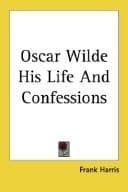
Oscar Wilde, His Life and Confessions — Volume 1Harris, Frank
History
Oscar Wilde, His Life and Confessions — Volume 1
Harris, Frank
Authors, Irish -- 19th century -- Biography; Wilde, Oscar, 1854-1900
Now what did "The Athenaeum" mean by taking a new book of imitative verse so
seriously and talking of it as the "evangel of a new creed," besides suggesting
that "it comes after the cult," and so forth?
It seems probable that "The Athenaeum" mistook Oscar Wilde for a continuator
of the Pre-Raphaelite movement with the sub-conscious and peculiarly English
suggestion that whatever is "aesthetic" or "artistic" is necessarily weak and
worthless, if not worse.
Soon after Oscar left Oxford "Punch" began to caricature him and ridicule the
cult of what it christened "The Too Utterly Utter." Nine Englishmen out of ten
took delight in the savage contempt poured upon what was known euphemistically
as "the aesthetic craze" by the pet organ of the English middle class.
This was the sort of thing "Punch" published under the title of "A Poet's Day":
"Oscar at Breakfast! Oscar at Luncheon!!
Oscar at Dinner!!! Oscar at Supper!!!!"
"'You see I am, after all, mortal,' remarked the poet, with an ineffable affable
smile, as he looked up from an elegant but substantial dish of ham and eggs.
Passing a long willowy hand through his waving hair, he swept away a stray
curl-paper, with the nonchalance of a D'Orsay.
"After this effort Mr. Wilde expressed himself as feeling somewhat faint; and
with a half apologetic smile ordered another portion of Ham and Eggs."
"Punch"'s verses on the subject were of the same sort, showing spite rather
than humour. Under the heading of "Sage Green" (by a fading-out aesthete) it
published such stuff as this:
My love is as fair as a lily flower.
("The Peacock blue has a sacred sheen!")
Oh, bright are the blooms in her maiden bower.
("Sing Hey! Sing Ho! for the sweet Sage Green!")
. . . . . . . . . . . . .
And woe is me that I never may win;
("The Peacock blue has a sacred sheen!")
For the Bard's hard up, and she's got no tin.
("Sing Hey! Sing Ho! for the sweet Sage Green!")
Taking the criticism as a whole it would be useless to deny that there is an
underlying assumption of vicious sensuality in the poet which is believed to
be reflected in the poetry. This is the only way to explain the condemnation
which is much more bitter than the verse deserves.
The poems gave Oscar pocket money for a season; increased too his notoriety;
but did him little or no good with the judicious: there was not a memorable
word or a new cadence, or a sincere cry in the book. Still, first volumes of
poetry are as a rule imitative and the attempt, if inferior to "Venus and
Adonis," was not without interest.
Oscar was naturally disappointed with the criticism, but the sales encouraged
him and the stir the book made and he was as determined as ever to succeed.
What was to be done next?
CHAPTER V--OSCAR'S QUARREL WITH WHISTLER AND MARRIAGE
Public-domain text, read in full here on John Shaqi.
Reviews
Reviews
No reviews yet
Be the first to share your thoughts on this work.
Join the Discussion
Join the discussion
Sign in to leave a comment or review.
Sign InorCreate an account