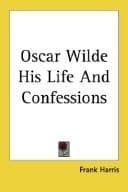
Oscar Wilde, His Life and Confessions — Volume 1Harris, Frank
History
Oscar Wilde, His Life and Confessions — Volume 1
Harris, Frank
Authors, Irish -- 19th century -- Biography; Wilde, Oscar, 1854-1900
I asked him once how it was he let Whistler off so lightly. He shrugged his
shoulders and showed some irritation.
"What could I say, Frank? Why should I belabour the beaten? The man is a wasp
and delights in using his sting. I have done more perhaps than anyone to make
him famous. I had no wish to hurt him."
Was it magnanimity or weakness or, as I think, a constitutional, a feminine
shrinking from struggle and strife. Whatever the cause, it was clear that
Oscar was what Shakespeare called himself, "an unhurtful opposite."
It is quite possible that if he had been attacked face to face, Oscar would have
given a better account of himself. At Mrs. Grenfell's (now Lady Desborough)
he crossed swords once with the Prime Minister and came off victorious. Mr.
Asquith began by bantering him, in appearance lightly, in reality, seriously,
for putting many of his sentences in italics.
"The man who uses italics," said the politician, "is like the man who raises his
voice in conversation and talks loudly in order to make himself heard."
It was the well-known objection which Emerson had taken to Carlyle's overwrought
style, pointed probably by dislike of the way Oscar monopolised conversation.
Oscar met the stereotyped attack with smiling good-humour.
"How delightful of you, Mr. Asquith, to have noticed that! The brilliant phrase,
like good wine, needs no bush. But just as the orator marks his good things by
a dramatic pause, or by raising or lowering his voice, or by gesture, so the
writer marks his epigrams with italics, setting the little gem, so to speak,
like a jeweller--an excusable love of one's art, not all mere vanity, I like to
think"--all this with the most pleasant smile and manner.
In measure as I distrusted Oscar's fighting power and admired his sweetness of
nature I took sides with him and wanted to help him. One day I heard some talk
at the Pelican Club which filled me with fear for him and quickened my resolve
to put him on his guard. I was going in just as Queensberry was coming out with
two or three of his special cronies.
"I'll do it," I heard him cry, "I'll teach the fellow to leave my son alone.
I'll not have their names coupled together."
I caught a glimpse of the thrust-out combative face and the hot grey eyes.
"What's it all about?" I asked.
"Only Queensberry," said someone, "swearing he'll stop Oscar Wilde going about
with that son of his, Alfred Douglas."
Suddenly my fears took form: as in a flash I saw Oscar, heedless and smiling,
walking along with his head in the air, and that violent combative insane
creature pouncing on him. I sat down at once and wrote begging Oscar to lunch
with me the next day alone, as I had something important to say to him. He
turned up in Park Lane, manifestly anxious, a little frightened, I think.
"What is it, Frank?"
I told him very seriously what I had heard and gave besides my impression of
Queensberry's character, and his insane pugnacity.
Public-domain text, read in full here on John Shaqi.
Reviews
Reviews
No reviews yet
Be the first to share your thoughts on this work.
Elsewhere in the archive
Join the Discussion
Join the discussion
Sign in to leave a comment or review.
Sign InorCreate an account