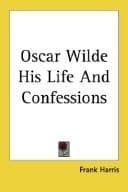
Oscar Wilde, His Life and Confessions — Volume 1Harris, Frank
History
Oscar Wilde, His Life and Confessions — Volume 1
Harris, Frank
Authors, Irish -- 19th century -- Biography; Wilde, Oscar, 1854-1900
"What can I do, Frank?" said Oscar, showing distress and apprehension. "It's
all Bosie."
"Who is Bosie?" I asked.
"That is Lord Alfred Douglas' pet name. It's all Bosie's fault. He has
quarrelled with his father, or rather his father has quarrelled with him.
He quarrels with everyone; with Lady Queensberry, with Percy Douglas, with
Bosie, everyone. He's impossible. What can I do?"
"Avoid him," I said. "Don't go about with Lord Alfred Douglas. Give
Queensberry his triumph. You could make a friend of him as easily as possible,
if you wished. Write him a conciliatory letter."
"But he'll want me to drop Bosie, and stop seeing Lady Queensberry, and I like
them all; they are charming to me. Why should I cringe to this madman?"
"Because he is a madman."
"Oh, Frank, I can't," he cried. "Bosie wouldn't let me."
"'Wouldn't let you'? I repeated angrily. "How absurd! That Queensberry man
will go to violence, to any extremity. Don't you fight other people's quarrels:
you may have enough of your own some day."
"You're not sympathetic, Frank," he chided weakly. "I know you mean it kindly,
but it's impossible for me to do as you advise. I cannot give up my friend. I
really cannot let Lord Queensberry choose my friends for me. It's too absurd."
"But it's wise," I replied. "There's a very bad verse in one of Hugo's plays.
It always amused me--he likens poverty to a low door and declares that when we
have to pass through it the man who stoops lowest is the wisest. So when you
meet a madman, the wisest thing to do is to avoid him and not quarrel with him."
"It's very hard, Frank; of course I'll think over what you say. But really
Queensberry ought to be in a madhouse. He's too absurd," and in that spirit he
left me, outwardly self-confident. He might have remembered Chaucer's words:
Beware also to spurne again a nall;
Strive not as doeth a crocke with a wall;
Deme thy selfe that demest others dede,
And trouth thee shall deliver, it is no drede.
CHAPTER XII--DANGER SIGNALS: THE CHALLENGE
These two years 1893-4 saw Oscar Wilde at the very zenith of success.
Thackeray, who always felt himself a monetary failure in comparison with
Dickens, calls success "one of the greatest of a great man's qualities," and
Oscar was not successful merely, he was triumphant. Not Sheridan the day after
his marriage, not Byron when he awoke to find himself famous, ever reached such
a pinnacle. His plays were bringing in so much that he could spend money like
water; he had won every sort of popularity; the gross applause of the many, and
the finer incense of the few who constitute the jury of Fame; his personal
popularity too was extraordinary; thousands admired him, many liked him; he
seemed to have everything that heart could desire and perfect health to boot.
Even his home life was without a cloud. Two stories which he told at this time
paint him. One was about his two boys, Vyvyan and Cyril.
Public-domain text, read in full here on John Shaqi.
Reviews
Reviews
No reviews yet
Be the first to share your thoughts on this work.
Elsewhere in the archive
Join the Discussion
Join the discussion
Sign in to leave a comment or review.
Sign InorCreate an account