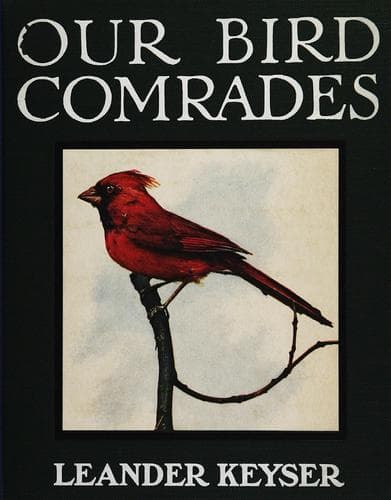
Our Bird ComradesKeyser, Leander S. (Leander Sylvester)
History
Our Bird Comrades
Keyser, Leander S. (Leander Sylvester)
Birds
A question that disturbs all bird lovers more or less is this: Does the
fine white vest of the jay cover a bad heart? Is he really a thief, a
nest robber, or even worse, a cannibal, in plumes? May the guardian
spirit of all feathered folk forbid that I should blacken the
reputation of any bird, yet honesty compels me to give an affirmative
answer to the foregoing question. I hasten, however, to say that I do
not believe he is as black as he has been painted by some observers,
who seem to delight in making out a verdict of capital guilt against
him. Although a predatory bird, he is not engaged all the time in
bloodthirsty pursuits, but only while his young are in the nest
clamoring for food. What are some of the proofs of his vandalism? I
will mention a few of them.
First, almost all the small birds make uncompromising war upon him,
especially in the breeding season, and many of them show signs of dire
distress when he goes near their nests. They often utter pitiful
cries, droop their wings, and the bravest of them dash at him savagely,
giving him many a cuff on the head and back. The wood pewee and the
kingbird succeed, I think, in driving him away; but the vireos and
warblers, being so much smaller, suffer greatly from his depredations.
If there were no real cause for it, these birds would not be filled
with panic and rage on account of the jay's presence. There is strong
presumptive evidence that they know him for an outlaw only too well.
The following incident will furnish positive proof of the jay's
cannibalistic proclivities: One spring my little boy brought home from
the country a young house wren, thinking it would make a delightful
pet. It was quite well fledged, but its short tail and white mouth
border proclaimed the tenderness of its youth. Fearing that the little
thing could not be reared by hand, as it refused all our proffered
tidbits, and chirped continually for its parents, I persuaded the lad
to give it its freedom. A mother wren living on our premises seemed
inclined to adopt the little waif, and we decided to put it under her
care. No sooner was the youngling let out of the cage than it flew to
the side of the house and began to scramble up the brick wall. It had
a hard tug, but at length succeeded in reaching a resting place on a
window-shutter of the second story.
Public-domain text, read in full here on John Shaqi.
Reviews
Reviews
No reviews yet
Be the first to share your thoughts on this work.
Join the Discussion
Join the discussion
Sign in to leave a comment or review.
Sign InorCreate an account