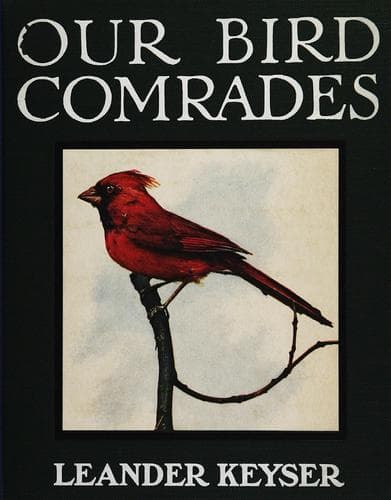
Our Bird ComradesKeyser, Leander S. (Leander Sylvester)
History
Our Bird Comrades
Keyser, Leander S. (Leander Sylvester)
Birds
One of my most pleasing observations was made on December 19, 1902.
There had been a number of days of severe weather, accompanied by hard
storms. Six inches of snow lay on the ground. Now the storm had spent
its force, the sun was shining genially, and the snow was melting.
Warm as it was, I was greatly surprised to find a flock of myrtle
warblers in the woods so late in the season. They had braved the
storms of the preceding week, and were as chipper and active as myrtle
warblers could be. But their employment was a still greater surprise.
They were darting about in the air among the treetops, as well as amid
the bushes in the deep ravine, catching insects on the wing. That
insects should be flying after the wintry weather of the previous week
was still more surprising than that the warblers should be here to dine
upon them. Soon after that day, however, the little yellow-rumps must
have taken the wing route to a more genial climate, for they were seen
no more that winter.
Of a more permanent character was the residence of the jolly juncos,
which dwelt all winter in northeastern Kansas, let the weather be never
so lowering. Always active and alert, flitting from bush to weed, and
from the snow-carpeted ground to the gnarled oak saplings, now
pilfering a dinner of wild berries and now a luncheon of weed seeds,
they seemed to generate enough warmth in their trig little bodies to
defy old Boreas to do his best. Water flowing from melting snow must
be ice-cold, yet the juncos plunged into the crystal pools and rinsed
their plumes with as much apparent relish as if their lavatory were
tepid instead of icy, and as if balmy instead of nipping winds were
blowing.
One day I watched a member of this family taking his dinner of wild
grapes. Finding a dark red cluster, he would pick off the juiciest
berry he could reach, press it daintily between his white mandibles for
a few moments, swallow a part of the pulp, and drop the rest to the
ground. What part of the grape did he eat? That is the precise
problem I could not solve with certainty, for on examining the rejected
portions that had been flung to the ground I found that one seed still
remained, together with part of the pulp and all of the broken rind. I
half suspect, though, that Master Junco likes to tipple a little--never
enough, however, be it remembered, to make him reel or lose his senses.
No! no! a toper Master Junco is not; he is too sane a bird for that!
Would that all the citizens of our republic would display as much sound
judgment and self-control.
Public-domain text, read in full here on John Shaqi.
Reviews
Reviews
No reviews yet
Be the first to share your thoughts on this work.
Elsewhere in the archive
Join the Discussion
Join the discussion
Sign in to leave a comment or review.
Sign InorCreate an account