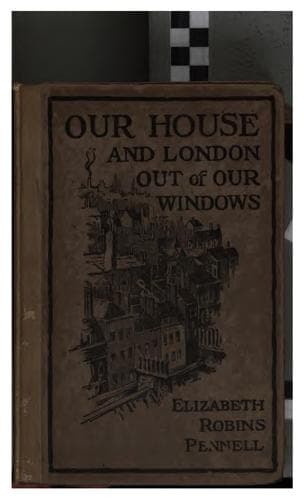
Our House and London out of Our Windows — John Shaqi
Our House and London out of Our WindowsPennell, Elizabeth Robins
General
Our House and London out of Our Windows
Pennell, Elizabeth Robins
London (England) -- Description and travel; Pennell, Elizabeth Robins, 1855-1936 -- Homes and haunts -- England -- London
Her despair at the thought of stopping work was more cruel to see than
her physical torture, and I knew, without her telling me, that her fear
of the pain she might have still to suffer was nothing compared to her
fear of the workhouse she had toiled all her life to keep out of. She
had just seven pounds and fifteen shillings for her fortune; her family,
being working people, would have no use for her once she was of no use
to them; our chambers were her home only so long as she could do in them
what she had agreed to do; there was no Workmen's Compensation Act in
those days, no old-age pensions, even if she had been old enough to get
one. What was left for a poor woman, full of years and pain, save the
one refuge which, all her life, she had been taught to look upon as
scarcely less shameful than the prison or the scaffold?
Well, Trimmer had done her best for us; now we did our best for her,
and, as it turned out, the best that could be done. Through a friend, we
got her into St. Bartholomew's Hospital. Her case was hopeless from the
first. A malignant growth so close to the brain that at her age an
operation was too serious a risk, and without it she might linger in
agony for months,--this was what life had been holding in store for
Trimmer during those long years of incessant toil, and self-sacrifice,
and obstinate belief that a drunken husband, a selfish brother, an empty
purse, were all for the best in our best of all possible worlds.
She did not know how ill she was, and her first weeks at the hospital
were happy. The violence of the pain was relieved, the poor tired old
body was the better for the rest and the cool and the quiet; she who had
spent her strength waiting on others enjoyed the novel experience of
being waited on herself. There were the visits of her family on visiting
days, and mine in between, to look forward to; some of our friends, who
had grown as fond of her as we, sent her fruit and flowers, and she
liked the consequence all this gave her in the ward. Then, the hospital
gossip was a distraction, perhaps because in talking about the
sufferings of others she could forget her own. My objection was that she
would spare me not a single detail. But in some curious way I could not
fathom, it seemed a help to Trimmer, and I had not the heart to cut her
stories short.
Public-domain text, read in full here on John Shaqi.
Reviews
Reviews
No reviews yet
Be the first to share your thoughts on this work.
Join the Discussion
Join the discussion
Sign in to leave a comment or review.
Sign InorCreate an account