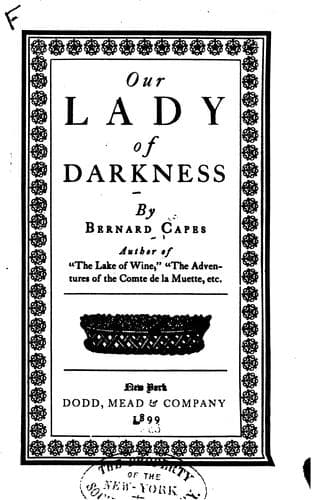
British -- France -- Fiction; France -- History -- Revolution, 1789-1799 -- Fiction; Historical fiction
So, here was the end--the mocking means adopted to the rejection of
his suit. It was a vile, cruel jest, he thought; a characteristic
indulgence of selfishness inhuman, for which presently he would take
fierce delight in calling a certain statesman to account. A statesman!
his stricken vanity yelled to itself: a diplomatic buffoon who would
sacrifice principle to a pun. So he classified Mr Sheridan, to whom he
would attribute this ruin of his hopes.
But deeper emotions prevailed. Had the duke been, or was he at this
last, despite his protestations, a party to the fraud? It mattered
nothing at all. There was a more intimate question to put to his
heart--the sadder and more sombre inquiry, Was the girl herself a
confederate? And here he fell all amazed and overwhelmed; plunged in a
slough of the most sorrowful speculation; struggling for foothold--for
some memory at which he might clutch for the righting of his moral
balance. There should have been many memories--of kind looks and words
and touches, all instinct with the tender humour of truth. God in
heaven! It was conceivable that the elder woman, the old practised
strategist, had played a consummate _rôle_. It was never inconsistent
with the principles of such pantological professors to indulge the
hypocritical as part of their universal equipment. But Pamela, with
not that of roguishness in her sweet eyes to justify a belief in
anything but an innately honest soul behind them! Pamela, in the
sincerity of her heart, in the womanliness of her nature, in the
cleanness of her lips, craftily intriguing to indict Love’s passion of
trust! He could not believe it. He could not but believe that some
words, some acts of hers--most haunting in the retrospect--had been
designed to express her sympathy with that in him which she could only
as yet recognise in herself for a mood. And it had been, then, Madame
de Genlis’ private policy to dismiss him before this mood--this
bud--could timely open out into a flower.
Well, she had succeeded--thanks to one self-interested, with whom the
reckoning was to come--she had succeeded, and aptly, no doubt, to the
sequel. For it was not to be supposed that madame’s artifice would
permit her to wean its subject from a fancy and fail to find the
subject other food for a stimulated appetite. My lord the viscount had
possibly, indeed, but (in the vernacular) kept the place warm for
another. The sun of his passion may have only a little ripened the
fruit for the delectation of lips more blest than his. By this time,
it was probable, the dream that had been his was a transferred
rapture.
Public-domain text, read in full here on John Shaqi.
Reviews
Reviews
No reviews yet
Be the first to share your thoughts on this work.
Elsewhere in the archive
Join the Discussion
Join the discussion
Sign in to leave a comment or review.
Sign InorCreate an account