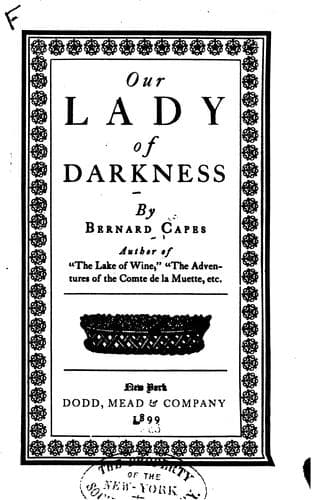
British -- France -- Fiction; France -- History -- Revolution, 1789-1799 -- Fiction; Historical fiction
She seemed to listen to the moaning entreaty that never ceased at her
feet. The president shifted in his chair and was restless with some
papers. This situation--it was interesting, tragic, spiced with
unexpected revelation; but the occasion, apart from it, was
peremptory; the killers were clamorous outside over the unaccountable
break in the programme.
“My honour,” cried Théroigne, “my early innocence, my faith and peace
of mind! If I name the return to me of these as the price of blood,
what is thy answer?”
His moaning rose only like a wind of despair. She drew herself erect
and turned to the judges.
“Messieurs--the price?”
The whole company seemed to spring to its feet. A roar went up from
it--and subsided.
“It is answered,” said the president. “Take M. St Denys away.”
There was a scurrying forward of men--a sudden stooping--a struggle.
Shriek after shriek came from the ground. Ned leapt into the fray like
a madman.
“To subscribe,” he screamed, “to the revengeful fury of a wanton! It
is not liberty or justice. Why, look at her, look at her. The beast
that would murder twenty innocents to secure the destruction of one
that had wounded her vanity. Gentlemen! to be so governed by a
harlot--to be----!”
He choked as he fought. There were savage hands at his throat.
“Do not harm him. I would not have him harmed.”
It was Théroigne that spoke. She stood apart, white and chill as a
figure of ice.
He spat curses at her, that mingled with the deadlier tumult. Monsieur
le président made his voice heard above the din.
“Eject this person, without hurt, from the rear of the prison.”
Seized, then, despite his frantic struggles; protesting; striving for
foothold; conscious always of the desperate outcry--faint, and
fainter--of the unhappy man he had sought to befriend, Ned felt
himself hurried along corridors, borne down steps and by way of
echoing dank vaults--thrust violently into a world of spacious
silence.
A door shut with a steely clang behind him. Before, stretched a
desolate waste tract of fields. The moon was at its full-flood light,
and the whole world seemed to float quietly on a sea of peace.
He threw himself, face-downwards, amongst the tufts of coarse grass,
and cried upon the flood to overwhelm him.
CHAPTER XIV.
At the end of November the young Viscount Murk was still a sojourner
in Paris. Always reserved and self-contained, he was become by then a
creature of wilful and habitual loneliness, with something, indeed, of
the moral dyspepsia that is induced of the morbid appetite that leads
one to feed upon one’s own heart. And when the heart is so inflamed of
love as to be sensitive to the least imaginary slight, assuredly the
dyspepsia, as in Ned’s case, shall be acute.
Public-domain text, read in full here on John Shaqi.
Reviews
Reviews
No reviews yet
Be the first to share your thoughts on this work.
Elsewhere in the archive
Join the Discussion
Join the discussion
Sign in to leave a comment or review.
Sign InorCreate an account