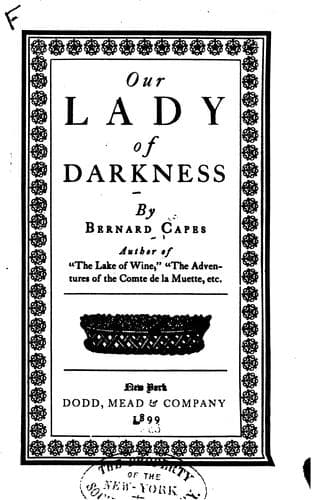
British -- France -- Fiction; France -- History -- Revolution, 1789-1799 -- Fiction; Historical fiction
“How did monsieur know? _Aïe_, it is true! I am alone. We were on our
way hither in quest of the new liberty; and God, pitying her weary
feet, gave it her when but half the journey was done.”
“And the little child? Oh, my friend--perhaps she heard the little
child crying for her in the night?”
“It is true, monsieur. But they will never be able to play birds’-fly
or shadow-buff in the moonlight up there without me. The rogue and the
little mother! And I hear them talking all the night through,
wondering when I shall come.”
“And you do not complain?”
“Why should I complain? They are so safe at last. Think what it would
have meant to them had God called me first.”
“Yes, yes. And--what is your name? You have never told me your name.”
“It is Laurent, monsieur. One is enough for us Cagots.”
“Laurent; what has become of the woman you brought, of your charity,
to Paris?”
“Merciful God! Monsieur is a wizard. Indeed, she found her reward in
the meeting with an old friend, who took her away from me.”
“Her reward!”
“Ah, monsieur! She was an angel of light to the dying mother. She
prayed with and she sang to her; and sometimes she would, with her
voice, earn a silver livre by the way--enough, in the end, to buy the
little place of rest in the churchyard.”
“Laurent, you are starved and frozen. Laurent--do you hear? I also am
alone in the world. You shall come with me, and be my servant and
companion; and we will travel, always travel; until at last, wayworn
and tired, we shall come back, we, too, to the little place of rest.”
He turned, greatly moved, through the gate into the gardens.
“Come!” he whispered--then he checked himself, and faced suddenly on
the astonished Cagot.
“Tell me!” he cried. “What would the Cagot think of him that wilfully
withheld her soul’s cure from a poor shameful woman that loved him?”
“That he feared--that he feared, monsieur.”
“Feared what?”
“To discharge his enemy from her thrall.”
“I said she loved him.”
“Yes, women love their oppressors; but it is a love that in its hour
of retaliation will ask a return in kindness for every blow given.
What shall be the fate of the man, then, when he kisses each bruise?”
Ned dwelt on the patient face in some astonishment.
“Philosopher,” he said, “wilt thou take service with me?”
“Monsieur takes my breath away. It is too wonderful to be true.”
“The truth, I think, Laurent, is always wonderful. Come--hurry thou!
I, at least, will profit by this lesson to go and tell it.”
“And to kiss the bruises, monsieur?”
Ned did not answer, but turned once more and entered the gardens, the
Cagot following at his heels.
Public-domain text, read in full here on John Shaqi.
Reviews
Reviews
No reviews yet
Be the first to share your thoughts on this work.
Elsewhere in the archive
Join the Discussion
Join the discussion
Sign in to leave a comment or review.
Sign InorCreate an account