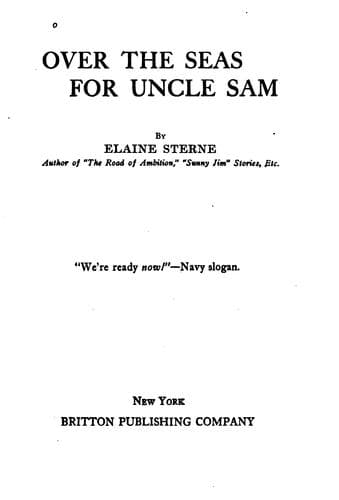
World War, 1914-1918 -- Personal narratives, American
One of our prize ways of speeding up a long evening on shipboard was to
swap notes on the summers we had spent. We all three, at different
times, had "vacated" in the Maine woods, almost at the identical spot,
and, do you know, we hailed the fact with something very close to
triumph!
I guess we three hashed over every little incident of our trips. We
found we had had the same close-mouthed Indian guide, that we had all
fished on the same bank of a little lost lake, that we had all camped on
the same site in a clearing by the water. But when we discovered that we
had used the same sort of tackle, and the same-sized rifles, we were
almost "moved to tears," as the lady novelists put it.
Those things, small as they seem, are the most important things in the
world when you are far away from home. They certainly make men
inseparable, and, aside from the fact that Dick Chamberlain and Tod
Carlin and I were the only Americans aboard, we became, from the first,
the best pals in the world.
We were proceeding as flagship of a convoy, and, as such, we kept an
extra sharp lookout for trouble, once we were in the zone.
It was three o'clock on the afternoon of a clear September day. The sea
was smooth and we were all on deck. The sky was so blue and the sun so
bright that it seemed as though the lurking submarine we were always
expecting was a myth like the sea serpent you read about but never see.
Night time is the time you are looking for an attack, but broad daylight
always seems to dispel thoughts of danger. However, the danger was
there.
We were struck close by the engine rooms. All I remember clearly was the
terrific roar and splintering of wood, and the sudden listing of the
ship. The order rang out to clear the ship and the crew immediately took
to the life-boats in the event of rapid settling.
We three found ourselves assigned to the same life-boat. There was a
slight delay in lowering it. That delay was fatal. The explosion that we
had been expecting blew our boat to pieces and we found ourselves
struggling in the water.
The officers' boat had been lowered and it drew up alongside of us. They
helped us in. The captain was all for going back to his ship. He was
sure there was no immediate danger of her sinking. The water-tight
compartments fore and aft were holding and he called for volunteers to
go aboard and help in an attempt to beach the ship.
By this time the other life-boats were beyond hailing distance and we
found out afterward that the men in them, including some British
gunners, were picked up later by patrol boats.
Of course, all the occupants of the remaining boats volunteered. I
didn't particularly like the looks of the ship, as her well docks were
on the sea level, but she had stopped settling and we followed the rest
aboard.
Public-domain text, read in full here on John Shaqi.
Reviews
Reviews
No reviews yet
Be the first to share your thoughts on this work.
Join the Discussion
Join the discussion
Sign in to leave a comment or review.
Sign InorCreate an account