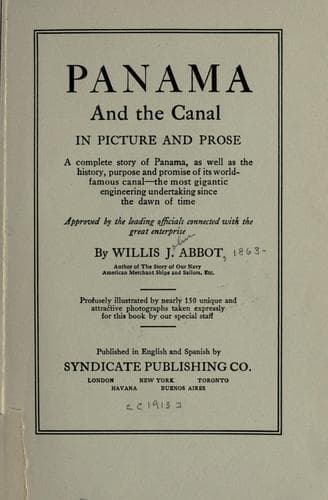
Panama and the Canal in Picture and ProseAbbot, Willis J. (Willis John)
History
Panama and the Canal in Picture and Prose
Abbot, Willis J. (Willis John)
Panama Canal (Panama) -- History
At Panama all was transferred to mules and started for the Atlantic
coast. So great was the volume of treasure and of goods to be
transported that the narrow trail along which the mules proceeded in
single file, usually 100 in a caravan or train, was occupied almost from
one end to the other, and the tinkling of the mule-bells, and the cries
of the muleteers were seldom stilled. Indians sometimes raided the trail
and cut out a loaded mule or two, and the buccaneers at one time,
finding robbery by sea monotonous, landed and won rich booty by raiding
a treasure caravan. The bulkier articles of commerce were packed in
carts at Panama and sent to Venta Cruz where they were transferred to
flat boats, and taken down the river to San Lorenzo and thence to Porto
Bello by sea. When the galleons had cast anchor at that port, and the
merchants and caravans were all arrived the little town took on an air
of bustle and excitement astonishing to the visitor who had seen it in
the hours of its normal life.
[Illustration: NATIVE BRIDGE IN THE DARIEN]
[Illustration: _Copyright, 1912, National Geographic Magazine,
Washington, D. C.
Photo by Henry Pittier_
CHOCO INDIAN GIRLS
Note the toes. With them they pick up the smallest objects]
“The spectator,” says Alcedo, “who had just before been considering
Porto Bello in a poor, unpeopled state, without a ship in the port and
breathing nothing but misery and wretchedness, would remain
thunderstruck at beholding the strange alteration which takes place at
the time of this fair. Now he would see the houses crowded with people,
the square and the streets crammed with chests of gold and silver, and
the port covered with vessels; some of these having brought by the river
Chagres from Panama the effects of Peru, such as cacao, bark (quina),
vicuna wool, bezoar stone, and other productions of these provinces. He
would see others bringing provisions from Cartagena; and he would
reflect that, however detestable might be its climate, this city was the
emporium of the riches of the two worlds, and the most considerable
commercial depot that was ever known.”
The visitor to Porto Bello today may see still standing the long stone
façade of the aduana, or custom house, facing the ancient plaza. In
that square the merchants erected cane booths and tents made of sails,
while all available space was filled with bales of goods drawn thither
on sledges. With the fleet came 5000 or 6000 soldiers, who besides the
sailors needful to man the vessels, the merchants and their clerks, the
porters, the buyers of all nationalities and the native sightseers
crowded the little town of a few hundred houses so that it appeared to
be in possession of a mob.
An itinerant preacher, Thomas Gage, who has left some entertaining
reminiscences of his experiences on the Isthmus, tells quaintly of
seeking lodgings during the fair:
Public-domain text, read in full here on John Shaqi.
Reviews
Reviews
No reviews yet
Be the first to share your thoughts on this work.
Elsewhere in the archive
Join the Discussion
Join the discussion
Sign in to leave a comment or review.
Sign InorCreate an account