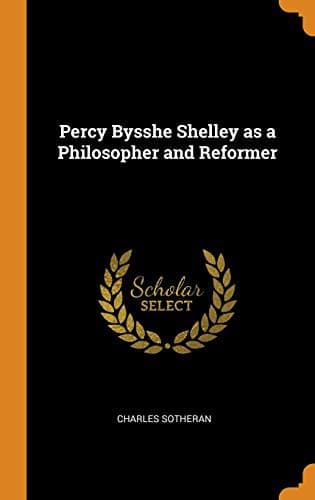
Percy Bysshe Shelley as a Philosopher and ReformerSotheran, Charles
Philosophy
Percy Bysshe Shelley as a Philosopher and Reformer
Sotheran, Charles
Shelley, Percy Bysshe, 1792-1822 -- Philosophy; Shelley, Percy Bysshe, 1792-1822 -- Political and social views
Hoping almost against hope for the regeneration of his country, he
submitted to the people of England a proposal for putting to the vote
the great reform question, which was filling the public mind; but he
was conscious that in the then unprepared state of public knowledge
and feeling, universal suffrage was fraught with peril, and remarks
that although
"A pure republic may be shown, by inferences the most
obvious and irresistible, to be that system of social order
the fittest to produce the happiness and promote the genuine
eminence of man. Yet nothing can less consist with reason,
or afford smaller hopes of any beneficial issue, than the
plan which should abolish the regal and the aristocratical
branches of our constitution, before the public mind,
through many gradations of improvement, shall have arrived
at the maturity which shall disregard these symbols of its
childhood."
An essay has come down to us (unhappily unfinished), in which he
argues in favor of "Government by Juries." It is but a fragment; and
yet it shows us that his mind was ever in search of the right
solution of the question of proper legislation for the masses. William
Pitt, with enemies on every side, publicly acknowledged the
extraordinary genius which impelled the American revolution, and
admired the constitution of this country, as well as the masterly
character of the "Declaration of Independence." In unstinted praise
does he speak of the learning and remarkable public spirit of the
signers. With equal praise, I am confident, everyone must eulogize the
"Declaration of Rights," compiled by Shelley, which he put before his
countrymen sixty-three years ago. Therein he has given the whole of
his conception of the correct theory of government, and it cannot fail
to be read by advanced minds with feelings of genuine pleasure.
The race has suffered through its long martyrdom with the horrors of
war. One tyrant after another, to aid his accursed ambition or revenge
his spite upon a brother monarch, has cursed the unhappy earth and
humanity with the terrors of long-continued devastation and bloodshed.
With burning pen has Shelley depicted war in its most hideous aspects,
and by most beautiful comparisons has he shown us the sublimity of
peace. He points out, that
"War is the statesman's game, the priest's delight,
The lawyer's jest, the hired assassin's trade."
He repudiates the notion that man, if left free, would wantonly heap
ruin, vice, or shivery, or curse his species with the withering blight
of war; and he shows us how
Public-domain text, read in full here on John Shaqi.
Reviews
Reviews
No reviews yet
Be the first to share your thoughts on this work.
Join the Discussion
Join the discussion
Sign in to leave a comment or review.
Sign InorCreate an account