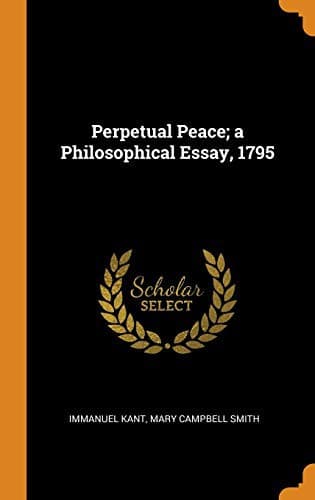
Perpetual Peace: A Philosophical EssayKant, Immanuel
PhilosophyPhilosophy
Perpetual Peace: A Philosophical Essay
Kant, Immanuel
Peace
Greeks; their attitude to other nations, 7;
to an enemy, _ib._;
their Sacred Wars, 16;
the Amphictyonic League, 16.
Grotius, Hugo; his _De Jure Belli et Pacis_, 24-27;
and the _Jus Gentium_, 24, 25;
and the Law of Nature, 25;
on peace, 27, 32, 40, 131.
H
Hague Conference (1899); 86, 90.
Hegel, G. W. F.; 57;
on war, 71, 72, 75.
Henry IV. of France; 30, 32, 33, 36.
Hobbes, Thomas; his theory of the state of nature and origin of
government, 4, 40-42, 51, 118, 119, 133; 6, 26, 27, 28, 37;
his influence on Kant, 40, 46;
his views on revolution, 41, 188;
of the relations between states, 43-46, 128, 131;
on the conduct of war, 45, 89, 120, 124, 159.
Holls, Fred. W.; 86.
Hooker, Richard; 52;
on the depravity of man, 173.
Hume, David; on the origin of government, 5, 52;
on the state of nature, 40, 41;
on the original contract, 52, 108, 109, 162.
I
International Law; the development of, 20-24;
its connection with the Reformation, 21, 24;
in Greece and Rome, 22, 23.
Intervention; 64, 93, 94, 112, 113.
J
Jews; war among the, 9-11;
their dream of peace, 32.
Justin; 15.
K
Kant, Immanuel; 26, 37;
his indebtedness to earlier political writers, 40, 46;
his theory of human development, 47-49;
and how this is possible, 49-51, 54;
on the foundation of the state, 51-54, 152-154;
the relations between states and individuals, 54, 55, 117-120,
128, 173, 174;
the necessity for reform within the state, 55, 56, 168;
the political and social conditions of his time, 57-59;
his attitude to war, 58, 133, 135, 136, 137, 149-151;
on the growing power of commerce, 59, 65, 142, 157;
his idea of federation, 60, 68, 69, 128-137, 192;
and ideal of perpetual peace, 61, 129, 196;
the conditions of its realization, 62-69;
on representative and other constitutions, 65-68, 120-128, 152,
153, 167;
his opinion of the English constitution, 66;
his disapproval of universal monarchy, 68, 69, 155, 156; 79, 83,
89, 100, 105;
on the right of way, 137-142;
on nature’s guarantee of a perpetual peace, 143-157;
on the relation between politics and morals, 161-196;
on revolution, 167, 168, 186-188.
L
Laveleye, Émile de; 81.
Lawrence, T. J.; 9, 78, 81.
Leibniz, Gottfried W.; 36;
his criticism of St. Pierre, 37, 38, 58, 106.
Locke, John; and the golden age, 3, 4;
on the original contract, 53;
on revolution, 53, 188; 67, 133.
Lorimer, James; 34, 80.
Louis Philippe; 76.
Luther, Martin; on war, 19.
M
Machiavelli, Nicolo; 162.
Maine, Henry; on Grotius and the _Jus Gentium_, 24, 25.
Maistre, Joseph de; 71.
Martineau, James; 102.
Mennonites; and war, 14.
Military service; of Christians, 14, 16, 18, 19;
compulsory, 89;
voluntary, 111.
Mill, John Stuart; 80.
Moltke, Graf von; 71, 73-75.
Public-domain text, read in full here on John Shaqi.
Reviews
Reviews
No reviews yet
Be the first to share your thoughts on this work.
Elsewhere in the archive
Join the Discussion
Join the discussion
Sign in to leave a comment or review.
Sign InorCreate an account