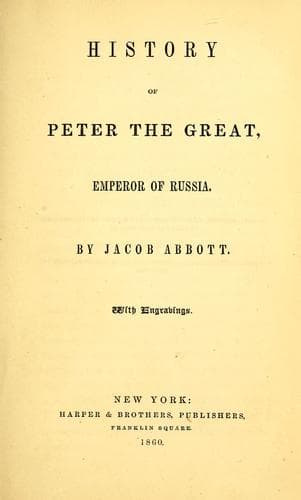
Peter I, Emperor of Russia, 1672-1725; Russia -- History -- Peter I, 1689-1725
Condition of Alexis--The two tribunals--Their powers--The Czar calls
for a decision--His addresses to the two councils--Deliberation of the
clergy--Their answer--Their quotations from Scripture--Cautious
language used by the bishops--They suggest clemency and
mercy--Additional confessions made by Alexis--The priest--Tolstoi sent
to Alexis--The Czar's three final questions--Alexis's three
answers--His account of the manner in which he had been educated--His
feelings toward his father--His attempts to maim himself--His
treasonable designs--Alexis's confession sent to the council--Decision
of the council--The promise of pardon--Forfeiture of it--Conclusion of
the sentence--The signatures--The 6th of July--The Czar's mental
struggles--Alexis brought out to hear his sentence--Overwhelmed with
dismay--Visit of his father--Sorrowful scene--Alexis sends a second
time for his father--His death--Czar's circular--The body laid in
state--Rumors circulated--Funeral ceremonies--The opposition broken
up--The mother of Alexis--Afrosinia--The Czar pardons her
The examinations and investigations described in the last chapter were
protracted through a period of several months. They were commenced in
February, and were not concluded until June. During all this time
Alexis had been kept in close confinement, except when he had been
brought out before his judges for the various examinations and
cross-examinations to which he had been subjected; and as the truth in
respect to his designs became more and more fully developed, and the
danger in respect to the result increased, he sank gradually into a
state of distress and terror almost impossible to be conceived.
The tribunals before whom he was tried were not the regular judicial
tribunals of the country. They were, on the other hand, two grand
convocations of all the great official dignitaries of the Church and of
the state, that were summoned expressly for this purpose--not to
_decide_ the case, for, according to the ancient customs of the Russian
empire, that was the sole and exclusive province of the Czar, but to
aid him in investigating it, and then, if called upon, to give him
their counsel in respect to the decision of it. One of these
assemblies consisted of the ecclesiastical authorities, the
archbishops, the bishops, and other dignitaries of the Church. The
other was composed of nobles, ministers of state, officers of the army
and navy in high command, and other great civil and military
functionaries. These two assemblies met and deliberated in separate
halls, and pursued their investigations in respect to the several
persons implicated in the affair, as they were successively brought
before them, under the direction of the Czar, though the final disposal
of each case rested, it was well understood, with him alone.
Public-domain text, read in full here on John Shaqi.
Reviews
Reviews
No reviews yet
Be the first to share your thoughts on this work.
Elsewhere in the archive
Join the Discussion
Join the discussion
Sign in to leave a comment or review.
Sign InorCreate an account