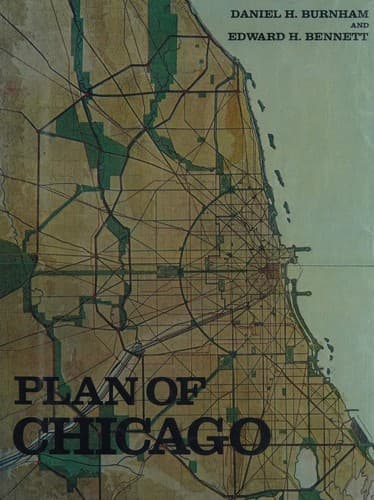
City planning -- Illinois -- Chicago -- History -- 20th century
The advantages of developing Grant Park as the intellectual center
of Chicago cannot be overestimated; for art everywhere has been a
source of wealth and moral influence. Already the students at the Art
Institute number more than four thousand, and as art collections and
opportunities for study increase Chicago will draw pupils from many
states. The influence of this training in raising the standard of
public taste and in creating demands for better physical conditions
must be manifest. The possession of Saint-Gaudens’ statue of Lincoln
is a distinction to the city of Chicago, in the same sense that the
Sistine Madonna enriches Dresden. Take the Louvre from Paris, the
Rubens collection from Antwerp, the National Gallery and the British
Museum from London, the Public Library and the Art Museum from Boston,
the Metropolitan Museum from New York, and the Library of Congress
from Washington, and the commercial loss to those cities would be
very considerable. When Chicago realizes all the advantages of the
location in Grant Park of three great groups of buildings devoted to
the intellectual and æsthetic cravings of man, it must be apparent that
the city will have a great asset in the gifts of those public-spirited
citizens who have found satisfaction in leaving to the public useful
memorials of the successful lives of the givers.
Public-spirited citizens have left precious legacies by providing for
the intellectual and æsthetic needs of the people; and it should be
esteemed a high privilege as well as a sacred duty to administer those
gifts in such a manner as to accomplish the most effective results
from the benefactions. So to manifest appreciation encourages others
to emulate the good example; and simply by taking thought the city
gains constantly by the addition of monuments which benefit the whole
community.
South of Grant Park, and extending along the lagoon between Twelfth
and Twenty-second streets, the plans show a great meadow developed as
an athletic field, with central gymnasium, outdoor exercising grounds,
swimming beaches, and such other features as have been found advisable
in the playground parks.
Another great opportunity comes from the fact that the river flows
through the center of the business district. It has been the experience
of European cities that the banks of a river, although at first devoted
only to commercial purposes, sooner or later are transformed into
places which combine business uses with drives and promenades for
traffic and for the pleasure of the people. The treatment of the Thames
in London, the Seine in Paris, the Danube in Vienna and Budapest, the
Scheldt at Antwerp, the Riverside Drive in New York, and the proposed
Potomac Quay at Washington are, all of them, instances of a development
which indicates clearly what must also result to the Chicago River when
the city comes to give attention to other needs in addition to those of
commerce and manufactures.
Public-domain text, read in full here on John Shaqi.
Reviews
Reviews
No reviews yet
Be the first to share your thoughts on this work.
Elsewhere in the archive
Join the Discussion
Join the discussion
Sign in to leave a comment or review.
Sign InorCreate an account