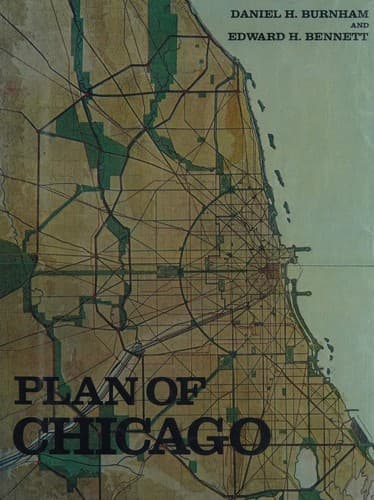
City planning -- Illinois -- Chicago -- History -- 20th century
Ultimately there should be a separate building for the department
of public works; but for the immediate future one wing of the
administrative building may be set apart for the engineers and
surveyors, for the electrical department, and the departments of
sewers, water, and gas, and the superintendent of streets. The need of
special quarters for this division of the public service arises not
only from the extent and character of the work of the various bureaus,
but also because of the great number of people who of necessity resort
to them in order to obtain permits for constructing and repairing
buildings, for establishing electrical, gas, and water connections, and
to transact the vast amount of business arising in a department that
affects every business, institution, and home.
The department of public health, requiring extensive laboratories,
should include an emergency hospital, rooms for the commission on
insanity, and a detention place for the insane, as well as a bureau of
vital statistics; offices for the health, food, and milk inspectors;
quarters for the coroner, including autopsy and inquest rooms and a
public morgue.
The hall of records should be accessible to the courts and the other
departments of the public service, and to the general public. The
building should be so constructed as to secure its contents from
possible danger from fire or the results of dampness; and it should
be so arranged and administered as to make the records immediately
available.
The court-house building offers architectural opportunities of the
first order; and here again the dignity, majesty, and impartiality of
justice should be made manifest in every appointment, so as to teach
the lesson that “obedience to law is liberty.” The highest of the city
courts, with chambers for the judges; the grand jury quarters; trial
jury rooms, with accommodations for lodging juries over night; the
offices of the district attorney; the marriage license department; and
the law library should be housed in this edifice.
To the building used as the police headquarters would be assigned the
central police court with its official clerks, stenographers, bailiffs,
bond and warrant officers; the city prison, with its complement of
vaults for criminal records of all kinds; the headquarters of the chief
of police and of the staff of detectives; a drill-room, assembly-room,
gymnasium, and practice gallery for shooting, and arsenal. One reason
for making this building one of the civic group is to promote the
convenience of the citizens who are called to the court for jury duty
or as witnesses.
Public-domain text, read in full here on John Shaqi.
Reviews
Reviews
No reviews yet
Be the first to share your thoughts on this work.
Elsewhere in the archive
Join the Discussion
Join the discussion
Sign in to leave a comment or review.
Sign InorCreate an account