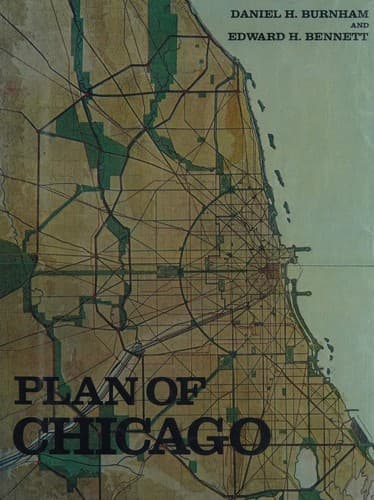
City planning -- Illinois -- Chicago -- History -- 20th century
this idea is now seen to be the highest aim of the city-builder.
Each city differs from every other city in its physical characteristics
and in the nature of its opportunities, so that the development of
every city must be along individual lines. This very fact allows full
scope for the development of that peculiar charm which, wherever
discovered and developed irresistibly draws to that city people of
discrimination and taste, and at the same time begets a spirit of
loyalty and satisfaction on the part of the citizens.
It is not to be expected that the people of Chicago will stand still
while the movement for better civic conditions is sweeping over the
whole civilized world; or that the stirrings of the new impulse that
have begun among this people will be suffered to die out, without
accomplishing the possibilities so abundantly offered to make this city
pre-eminent among commercial cities.
The experience of other cities both ancient and modern, both abroad and
at home, teaches Chicago that the way to true greatness and continued
prosperity lies in making the city convenient and healthful for the
ever-increasing numbers of its citizens; that civic beauty satisfies
a craving of human nature so deep and so compelling that people will
travel far to find and enjoy it; that the orderly arrangement of fine
buildings and monuments brings fame and wealth to the city; and that
the cities which truly exercise dominion rule by reason of their appeal
to the higher emotions of the human mind. The problem for Chicago,
therefore, resolves itself into making the best use of a situation, the
central location and resources of which have already drawn together
millions of people, and are clearly destined to assemble many times
that number; and planning for that civic development which promotes
present content and insures permanence.
[Illustration: XXXIII. FLORENCE, ITALY.
This silhouette of towers is characteristic of Italian towns in the
Middle Ages. From La Toscane.]
FOOTNOTES:
[2] Ancient Rome, Chap. IV.
[3] Church Building in the Middle Ages.
[4] Baron Haussmann and the Topographical Transformation of Paris; by
Edward R. Smith, Reference Librarian, Avery Architectural Library,
Columbia University. The Architectural Record, 1907.
[5] A reasonable estimate, for the single year 1907, of the
gold imported into France by travelers, to be spent in hotels,
transportation, amusements, and purchases, is $600,000,000, a sum equal
to the highest gold reserve of the Bank of France. Americans commonly
exaggerate both their numbers and their expenditures in France; but
one-fifth of this sum ($120,000,000) may safely be set down as their
share.—_French Finance, by Stoddard Dewey, Atlantic Monthly, August,
1908._
[6] German City Planning; by Cornelius Gurlitt. Translated for the
Metropolitan Improvements Commission of Boston, by Sylvester Baxter.
Public-domain text, read in full here on John Shaqi.
Reviews
Reviews
No reviews yet
Be the first to share your thoughts on this work.
Join the Discussion
Join the discussion
Sign in to leave a comment or review.
Sign InorCreate an account