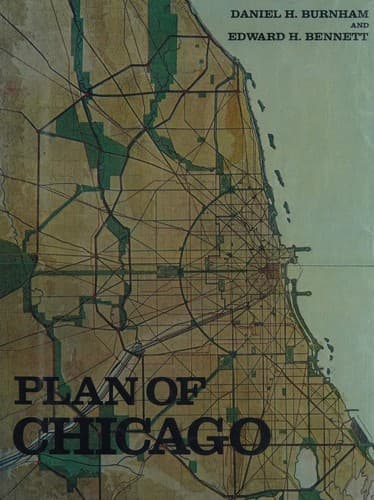
City planning -- Illinois -- Chicago -- History -- 20th century
The development of a system of outlying large parks along the lines
above indicated will give to Chicago breathing-spaces adequate at least
for the immediate future; the physical character of the lands to be
taken will insure a diversity in natural features most pleasing and
refreshing to dwellers in cities; and the acquisition of the areas
entirely around the present city will afford convenient access for all
the citizens, so that each section will be accommodated. Moreover, the
development of especially beautiful sections, such as the region about
Lake Zurich, will give marked individuality to Chicago’s outlying park
system. It is by seizing on such salient features of a landscape and
emphasizing their peculiar features that the charm and the dignity of
the city are enhanced.
[Illustration: LXVIII. CHICAGO. SHERMAN PARK.
View of the open-air swimming pool.]
FOOTNOTES:
[20] Report of the Special Park Commission; Compiled by Dwight Heald
Perkins, 1904.
[21] See Acts of May 14, 1903; May 2, 1907; April 19, 1879; June 21,
1895; May 25, 1907.
[Illustration: LXIX. CHICAGO. DIAGRAM OF A SYSTEM OF FREIGHT HANDLING
FOR LAND AND WATER TRANSPORTATION, TO BE WORKED IN CONJUNCTION WITH ONE
ANOTHER.
(1) A central clearing and warehousing yard. (2) A north harbor at the
mouth of the Chicago River. (3) A south harbor at the mouth of the
Calumet River. (4) Underground freight lines interconnecting the city
stations, the central yard, and the two harbors; these lines are shown
in red; they do not represent exact locations of the routes.
COPYRIGHT, 1909, BY COMMERCIAL CLUB OF CHICAGO ]
CHAPTER V
TRANSPORTATION: A FREIGHT CENTER: GROUPING OF PASSENGER STATIONS: A
LOOP SYSTEM
Chicago has been made largely by the railroads, and its future
prosperity is dependent upon them. In the past, however, it has been
the increase in the number of roads reaching this city which has built
up its commerce; but now, with twenty-two trunk lines entering Chicago
from every possible direction, and with connections extending to all
portions of the country, the question of numbers has ceased to be the
important one.
The present problem is to handle the traffic of the railroads with
dispatch and at the lowest cost. The city is too large for each
railroad to attempt to maintain a separate system unrelated to that
of any other except the physical connection of the tracks. The time
has come to develop one common system for the handling of freight,—a
traffic clearing-house. The whole perplexing and intensely intricate
subject requires not only the careful study of men expert in such
matters, but also a spirit of mutual forbearance and conciliation among
railroad managers for the sake of promoting the general good.
Public-domain text, read in full here on John Shaqi.
Reviews
Reviews
No reviews yet
Be the first to share your thoughts on this work.
Elsewhere in the archive
Join the Discussion
Join the discussion
Sign in to leave a comment or review.
Sign InorCreate an account