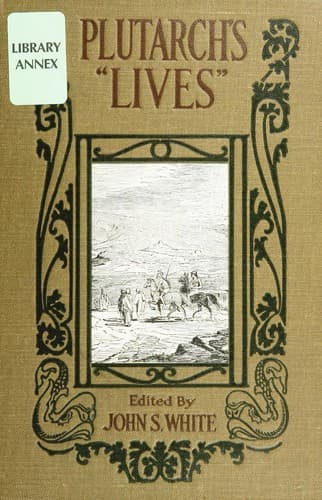
Plutarch: Lives of the noble Grecians and RomansPlutarch
PhilosophyPhilosophy
Plutarch: Lives of the noble Grecians and Romans
Plutarch
Greece -- Biography -- Early works to 1800; Rome -- Biography -- Early works to 1800
Such objects we find in the acts of virtue, which also produce in the
minds of mere readers about them, an emulation and eagerness that may
lead them on to imitation. In other things there does not immediately
follow upon the admiration and liking of the thing done, any strong
desire of doing the like. Nay, many times, on the very contrary, when
we are pleased with the work, we slight and set little by the workman or
artist himself, as, for instance, in perfumes and purple dyes, we are
taken with the things themselves well enough, but do not think dyers and
perfumers otherwise than low and sordid people. It was not said amiss
by Antisthenes, when people told him that one Ismenias was an excellent
piper, "It may be so," said he, "but he is but a wretched human being,
otherwise he would not have been an excellent piper." And king Philip,
to the same purpose, told his son Alexander, who once at a merry-meeting
played a piece of music charmingly and skillfully, "Are you not ashamed,
son, to play so well?" For it is enough for a king, or prince to find
leisure sometimes to hear others sing, and he does the muses quite honor
enough when he pleases to be but present, while others engage in such
exercises and trials of skill.
He who busies himself in mean occupations produces, in the very pains he
takes about things of little or no use, an evidence against himself of
his negligence and indisposition to what is really good. Nor did any
generous and ingenuous young man, at the sight of the statue of Jupiter
at Pisa, ever desire to be a Phidias, or, on seeing that of Juno at
Argos, long to be a Polycletus, or feel induced by his pleasure in their
poems to wish to be an Anacreon or Philetas or Archilochus. For it does
not necessarily follow, that, if a piece of work please for its
gracefulness, therefore he that wrought it deserves our admiration.
Whence it is that neither do such things really profit or advantage the
beholders, upon the sight of which no zeal arises for the imitation of
them, nor any impulse or inclination, which may prompt any desire or
endeavor of doing the like. But virtue, by the bare statement of its
actions, can so affect men's minds as to create at once both admiration
of the things done and desire to imitate the doers of them. The goods
of fortune we would possess and would enjoy; those of virtue we long to
practice and exercise; we are content to receive the former from others,
the latter we wish others to experience from us. Moral good is a
practical stimulus; it is no sooner seen, than it inspires an impulse to
practice; and influences the mind and character not by a mere imitation
which we look at, but, by the statement of the fact, creates a moral
purpose which we form.
Public-domain text, read in full here on John Shaqi.
Reviews
Reviews
No reviews yet
Be the first to share your thoughts on this work.
Elsewhere in the archive
Join the Discussion
Join the discussion
Sign in to leave a comment or review.
Sign InorCreate an account