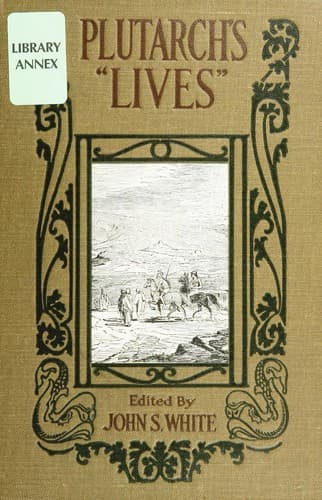
Plutarch: Lives of the noble Grecians and RomansPlutarch
PhilosophyPhilosophy
Plutarch: Lives of the noble Grecians and Romans
Plutarch
Greece -- Biography -- Early works to 1800; Rome -- Biography -- Early works to 1800
And so we have thought fit to spend our time and pains in writing of the
lives of famous persons; and have composed this tenth book upon that
subject, containing the life of Pericles, and that of Fabius Maximus,
who carried on the war against Hannibal, men alike, as in their other
virtues and good parts, so especially in their mild and upright temper
and demeanor, and in that capacity to bear the cross-grained humors of
their fellow-citizens and colleagues in office which made them both most
useful and serviceable to the interests of their countries. Whether we
take a right aim at our intended purpose, it is left to the reader to
judge by what he shall here find.
Pericles was of the tribe Acamantis, and the township Cholargus, of the
noblest birth both on his father's and mother's side. Xanthippus, his
father, who defeated the king of Persia's generals in the battle at
Mycale, took to wife Agariste, the grandchild of Clisthenes, who drove
out the sons of Pisistratus, and nobly put an end to their tyrannical
usurpation, and moreover made a body of laws, and settled a model of
government admirably tempered and suited for the harmony and safety of
the people.
His mother, being near her time, fancied in a dream that she was brought
to bed of a lion, and a few days after was delivered of Pericles, in
other respects perfectly formed, only his head was somewhat longish and
out of proportion. For which reason almost all the images and statues
that were made of him have the head covered with a helmet, the workmen
apparently being willing not to expose him. The poets of Athens called
him Schinocephalos, or squill-head, from schinos, a squill, or sea-
onion. One of the comic poets, Cratinus, in the Chirons,
tells us that --
Old Chronos once took queen Sedition to wife;
Which two brought to life
That tyrant far-famed,
Whom the gods the supreme skull-compeller have named.
And, in the Nemesis, addresses him --
Come, Jove, thou head of gods.
And a second, Teleclides, says, that now, in embarrassment with
political difficulties, he sits in the city,--
Fainting underneath the load
Of his own head; and now abroad,
From his huge gallery of a pate,
Sends forth trouble to the state.
And a third, Eupolis, in the comedy called the Demi, in a series of
questions about each of the demagogues, whom he makes in the play to
come up from hell, upon Pericles being named last, exclaims,--
And here by way of summary, now we've done,
Behold, in brief, the heads of all in one.
Public-domain text, read in full here on John Shaqi.
Reviews
Reviews
No reviews yet
Be the first to share your thoughts on this work.
Elsewhere in the archive
Join the Discussion
Join the discussion
Sign in to leave a comment or review.
Sign InorCreate an account