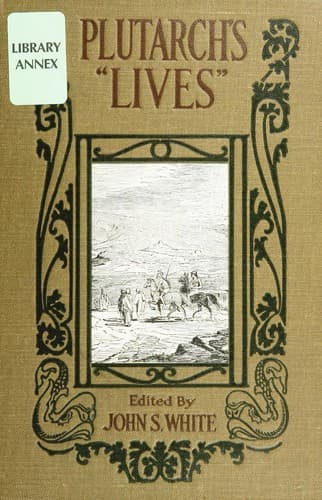
Plutarch: Lives of the noble Grecians and RomansPlutarch
PhilosophyPhilosophy
Plutarch: Lives of the noble Grecians and Romans
Plutarch
Greece -- Biography -- Early works to 1800; Rome -- Biography -- Early works to 1800
Indeed, whosoever shall look at the sedition and misgovernment which
befell these bordering nations to whom they were as near related in
blood as situation, will find in them the best reason to admire the
wisdom and foresight of Lycurgus. For these three states, in their
first rise, were equal, or, if there were any odds, they lay on the side
of the Messenians and Argives, who, in the first allotment, were thought
to have been luckier than the Spartans; yet was their happiness but of
small continuance, partly the tyrannical temper of their kings and
partly the ungovernableness of the people quickly bringing upon them
such disorders, and so complete an overthrow of all existing
institutions, as clearly to show how truly divine a blessing the
Spartans had had in that wise lawgiver who gave their government its
happy balance and temper.
But of this I shall say more in its due place.
After the creation of the thirty senators, his next task, and, indeed,
the most hazardous he ever undertook, was the making a new division of
their lands. For there was an extreme inequality amongst them, and
their state was overloaded with a multitude of indigent and necessitous
persons, while its whole wealth had centered upon a very few. To the
end, therefore, that he might expel from the state arrogance and envy,
luxury and crime, and those yet more inveterate diseases of want and
superfluity, he obtained of them to renounce their properties, and to
consent to a new division of the land, and that they should live all
together on an equal footing; merit to be their only road to eminence,
and the disgrace of evil, and credit of worthy acts, their one measure
of difference between man and man.
Upon their consent to these proposals, proceeding at once to put them
into execution, he divided the country of Laconia in general into thirty
thousand equal shares, and the part attached to the city of Sparta into
nine thousand; these he distributed among the Spartans, as he did the
others to the country citizens. Some authors say that he made but six
thousand lots for the citizens of Sparta, and that king Polydorus added
three thousand more. Others say that Polydorus doubled the number
Lycurgus had made, which, according to them, was but four thousand five
hundred. A lot was so much as to yield, one year with another, about
seventy bushels of grain for the master of the family, and twelve for
his wife, with a suitable proportion of oil and wine. And this he
thought sufficient to keep their bodies in good health and strength;
superfluities they were better without. It is reported, that, as he
returned from a journey shortly after the division of the lands, in
harvest time, the ground being newly reaped, seeing the stacks all
standing equal and alike, he smiled, and said to those about him,
"Methinks all Laconia looks like one family estate just divided among a
number of brothers."
Public-domain text, read in full here on John Shaqi.
Reviews
Reviews
No reviews yet
Be the first to share your thoughts on this work.
Elsewhere in the archive
Join the Discussion
Join the discussion
Sign in to leave a comment or review.
Sign InorCreate an account