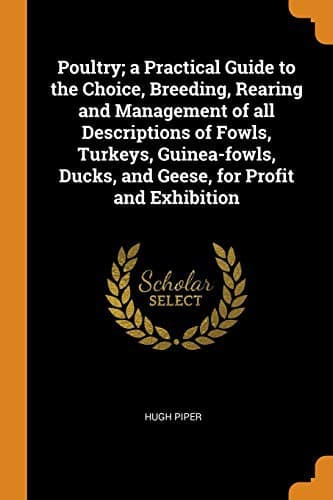
Poultry: A Practical Guide to the Choice, Breeding, Rearing, and Management of all Descriptions of Fowls, Turkeys, Guinea-fowls, Ducks, and Geese, for Profit and Exhibition.Piper, Hugh
Science
Poultry: A Practical Guide to the Choice, Breeding, Rearing, and Management of all Descriptions of Fowls, Turkeys, Guinea-fowls, Ducks, and Geese, for Profit and Exhibition.
Piper, Hugh
Poultry -- Breeding
See to a sick fowl at once; prompt attention may prevent serious
illness, and loss of the bird. When a fowl's plumage is seen to be
bristled up and disordered, and its wings hanging or dragging, it should
be at once removed from the others, and looked to. Pale and livid combs
are as certain a sign of bad health in fowls, as the paleness or
lividness of the lips is in human beings. Every large establishment
should have a warm, properly ventilated, and well-lighted house,
comfortably littered down with clean straw, to be used as a hospital,
and every fowl should be removed to it upon showing any symptoms of
illness, even if the disease is not infectious, for sick fowls are often
pecked at, ill treated, and disliked by their healthy companions. Bear in
mind that prevention is better than cure, and that proper management and
housing, good feeding, pure water and greens, cleanliness and exercise,
will prevent all, or nearly all, these diseases.
APOPLEXY arises from over-feeding, and can seldom be treated in time to
be of service. The only remedy is bleeding, by opening the large vein
under the wing, and pouring cold water on the head for a few minutes.
Open the vein with a lancet, or if that is not at hand, with a
sharp-pointed penknife; make the incision lengthways, not across, and
press the vein with your thumb between the opening and the body, when
the blood will flow. If the fowl should recover, feed it on soft, low
food for a few days, and keep it quiet. It occurs most often in laying
hens, which frequently die on the nest while ejecting the egg; and is
frequently caused by too much of very stimulating food, such as
hempseed, or improper diet of greaves, and also by giving too much pea
or bean meal.
Public-domain text, read in full here on John Shaqi.
Reviews
Reviews
No reviews yet
Be the first to share your thoughts on this work.
Elsewhere in the archive
Join the Discussion
Join the discussion
Sign in to leave a comment or review.
Sign InorCreate an account