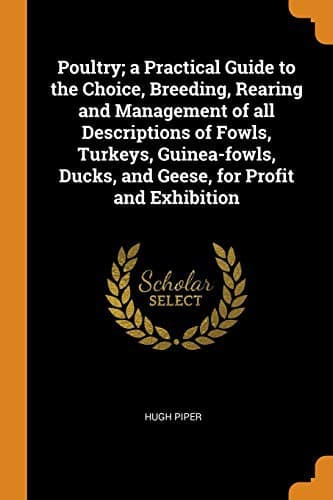
Poultry: A Practical Guide to the Choice, Breeding, Rearing, and Management of all Descriptions of Fowls, Turkeys, Guinea-fowls, Ducks, and Geese, for Profit and Exhibition.Piper, Hugh
Science
Poultry: A Practical Guide to the Choice, Breeding, Rearing, and Management of all Descriptions of Fowls, Turkeys, Guinea-fowls, Ducks, and Geese, for Profit and Exhibition.
Piper, Hugh
Poultry -- Breeding
Fowls are very fond of shell snails. They are still more fattening than
worms, and therefore too many must not be given when laying, but they do
not injure the flavour of the flesh. Some will eat slugs, but they are
not generally fond of these, and many fowls will not touch them.
One great secret of profitable poultry-keeping is, that hens cannot
thrive and lay without a considerable quantity of animal food, and
therefore if they cannot obtain a sufficient quantity in the form of
insects, it must be supplied in meat, which, minced small, should be
given daily and also to all fowls in winter, as insects are then not to
be had. Mr. Baily says: "Do not give fowls meat, but always have the
bones thrown out to them after dinner; they enjoy picking them, and
perform the operation perfectly. Do not feed on raw meat; it makes fowls
quarrelsome, and gives them a propensity to peck each other, especially
in moulting time if the accustomed meat be withheld." They will peck at
the wound of another fowl to procure blood, and even at their own wounds
when within reach. Take care that long pieces of membrane, or thick
skin, tough gristle or sinew, or pieces of bone, are not left sticking
to the meat, or it may choke them, or form a lodgment in the crop.
"Pieces of suet or fat," says Mr. Dickson, "are liked by fowls better
than any other sort of animal food; but, if supplied in any quantity,
will soon render them too fat for continuing to lay. Should there be any
quantity of fat to dispose of, it ought, therefore, to be given at
intervals, and mixed or accompanied with bran, which will serve to fill
their crops without producing too much nutriment." It is a good plan
when there are plenty of bones and scraps of meat to boil them well, and
mix bran or pollard with the liquor before giving them to the fowls, as
it makes the meat easier to mince, and extracts nourishment from the
bones. When minced-meat is required for a large number of fowls, a
mincing or sausage machine will save much time and prepare the meat
better than chopping. They are as fond of fish, whether salted or fresh,
as of flesh. Crumbs, fragments of pastry, and all the refuse and slops
of the kitchen may be given them. Greaves, so much advertised for fowls,
are very bad, rapidly throwing them out of condition, causing their
feathers to fall off, spoiling the flavour of the flesh; they cause
premature decrepitude, and engender many diseases, the most common being
dropsy of an incurable character.
Where there is no danger from thieves, foxes, or other vermin, and the
run is extensive, it is the best plan to leave the small door of the
fowl-house open, and the fowls will go out at daybreak and pick up many
an "early worm" and insect. The morning meal may be given when the
household has risen.
Public-domain text, read in full here on John Shaqi.
Reviews
Reviews
No reviews yet
Be the first to share your thoughts on this work.
Join the Discussion
Join the discussion
Sign in to leave a comment or review.
Sign InorCreate an account