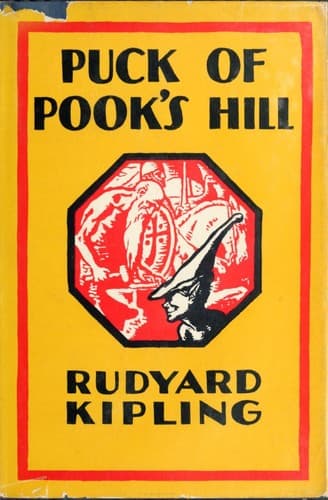
Great Britain -- History -- Fiction; Space and time -- Fiction
'After the storm we saw a mountain whose top was covered with snow and
pierced the clouds. The grasses under this mountain, boiled and eaten,
are a good cure for soreness of the gums and swelled ankles. We lay
there eight days, till men in skins threw stones at us. When the heat
increased Witta spread a cloth on bent sticks above the rowers, for the
wind failed between the Island of the Mountain and the shore of Africa,
which is east of it. That shore is sandy, and we rowed along it within
three bowshots. Here we saw whales, and fish in the shape of shields,
but longer than our ship. Some slept, some opened their mouths at us,
and some danced on the hot waters. The water was hot to the hand, and
the sky was hidden by hot, grey mists, out of which blew a fine dust
that whitened our hair and beards of a morning. Here, too, were fish
that flew in the air like birds. They would fall on the laps of the
rowers, and when we went ashore we would roast and eat them.'
The knight paused to see if the children doubted him, but they only
nodded and said, 'Go on.'
'The yellow land lay on our left, the grey sea on our right. Knight
though I was, I pulled my oar amongst the rowers. I caught seaweed and
dried it, and stuffed it between the pots of beads lest they should
break. Knighthood is for the land. At sea, look you, a man is but a
spurless rider on a bridleless horse. I learned to make strong knots in
ropes--yes, and to join two ropes end to end, so that even Witta could
scarcely see where they had been married. But Hugh had tenfold more
sea-cunning than I. Witta gave him charge of the rowers of the left
side. Thorkild of Borkum, a man with a broken nose, that wore a Norman
steel cap, had the rowers of the right, and each side rowed and sang
against the other. They saw that no man was idle. Truly, as Hugh said,
and Witta would laugh at him, a ship is all more care than a Manor.
'How? Thus. There was water to fetch from the shore when we could find
it, as well as wild fruit and grasses, and sand for scrubbing of the
decks and benches to keep them sweet. Also we hauled the ship out on low
islands and emptied all her gear, even to the iron wedges, and burned
off the weed, that had grown on her, with torches of rush, and smoked
below the decks with rushes dampened in salt water, as Hlaf the Woman
orders in her Ship-Book. Once when we were thus stripped, and the ship
lay propped on her keel, the bird cried, "Out swords!" as though she saw
an enemy. Witta vowed he would wring her neck.'
'Poor Polly! Did he?' said Una.
Public-domain text, read in full here on John Shaqi.
Reviews
Reviews
No reviews yet
Be the first to share your thoughts on this work.
Join the Discussion
Join the discussion
Sign in to leave a comment or review.
Sign InorCreate an account