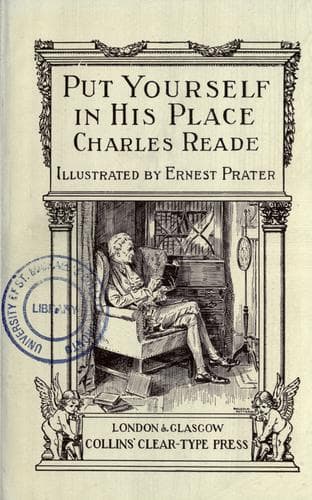
English fiction -- 19th century; Labor unions -- Fiction
“If you please, ma'am, I was to give it him myself.”
Henry recognized the voice, opened the door, and invited her in.
Mrs. Little followed her, full of suppressed curiosity.
This put Jael out, but she was too patient to show it.
“It is the bust,” said she; and put it softly down on the table with her
strong arms.
Henry groaned. “She despises even that; she flings it at my head without
a word.”
“Nay; I have got a note for you.”
“Then why didn't you give it me at once?” cried Henry impatiently.
She handed him the note without a word.
It ran thus:
“Miss Carden presents her compliments to Mr. Little, and sends him his
beautiful bust. She is grieved that he will accept no remuneration
for his lessons; and begs permission to offer her best wishes for his
happiness and prosperity.”
The gentleness of this disarmed Henry, and at the same time the firmness
crushed him. “It is all over!” he cried, despairingly: “and yet I can't
hate her.”
He ran from the room, unable to restrain his tears, and too proud and
fiery to endure two spectators of his grief.
Mrs. Little felt as mothers feel toward those who wound their young.
“Is it the woman's likeness?” said she bitterly, and then trembled with
emotion.
“Ay.”
“May I see it?”
“Surely, ma'am.” And Jael began to undo the paper.
But Mrs. Little stopped her. “No, not yet. I couldn't bear the sight of
a face that has brought misery upon him. I would rather look at yours.
It is a very honest one. May I inquire your name?”
“Jael Dence--at your service.”
“Dence! ah, then no wonder you have a good face: a Cairnhope face. My
child, you remind me of days gone by. Come and see me again, will you?
Then I shall be more able to talk to you quietly.”
“Ay, that I will, ma'am.” And Jael colored all over with surprise, and
such undisguised pleasure that Mrs. Little kissed her at parting.
She had been gone a considerable time, when Henry came back; he found
his mother seated at the table, eying his masterpiece with stern and
bitter scrutiny.
It was a picture, those two rare faces in such close opposition. The
carved face seemed alive; but the living face seemed inspired, and to
explore the other to the bottom with merciless severity. At such work
the great female eye is almost terrible in its power.
“It is lovely,” said she. “It seems noble. I can not find what I know
must be there. Oh, why does God give such a face as this to a fool?”
“Not a word against her,” said Henry. “She is as wise, and as noble, and
as good, as she is beautiful. She has but one fault; she loves another
man. Put her sweet face away; hide it from me till I am an old man, and
can bring it out to show young folks why I lived and die a bachelor.
Good-by, dear mother, I must saddle Black Harry, and away to my night's
work.”
Public-domain text, read in full here on John Shaqi.
Reviews
Reviews
No reviews yet
Be the first to share your thoughts on this work.
Elsewhere in the archive
Join the Discussion
Join the discussion
Sign in to leave a comment or review.
Sign InorCreate an account