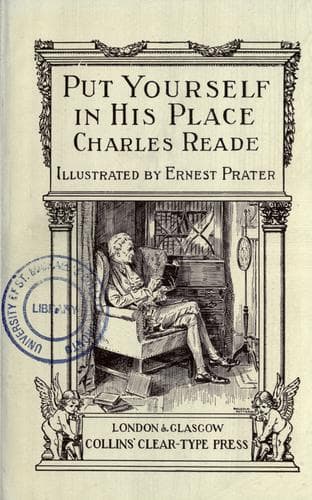
English fiction -- 19th century; Labor unions -- Fiction
It was no ruin, though on the road to decay. One of the side walls was
much lower than the other, and the roof had two great waves, and was
heavily clothed, in natural patterns, with velvet moss, and sprinkled
all over with bright amber lichen: a few tiles had slipped off in two
places, and showed the rafters brown with time and weather: but the
structure was solid and sound; the fallen tiles lay undisturbed beneath
the eaves; not a brick, not a beam, not a gravestone had been stolen,
not even to build the new church: of the diamond panes full half
remained; the stone font was still in its place, with its Gothic cover,
richly carved; and four brasses reposed in the chancel, one of them
loose in its bed.
What had caused the church to be deserted had kept it from being
desecrated; it was clean out of the way. No gypsy, nor vagrant, ever
slept there, and even the boys of the village kept their distance.
Nothing would have pleased them better than to break the sacred windows
time had spared, and defile the graves of their forefathers with
pitch-farthing and other arts; but it was three miles off, and there was
a lion in the way: they must pass in sight of Squire Raby's house; and,
whenever they had tried it, he and his groom had followed them on
swift horses that could jump as well as gallop, had caught them in the
churchyard, and lashed them heartily; and the same night notice to quit
had been given to their parents, who were all Mr. Raby's weekly tenants:
and this had led to a compromise and flagellation.
Once or twice every summer a more insidious foe approached. Some little
party of tourists, including a lady, who sketched in water and never
finished anything, would hear of the old church, and wander up to it.
But Mr. Raby's trusty groom was sure to be after them, with orders
to keep by them, under guise of friendship, and tell them outrageous
figments, and see that they demolished not, stole not, sculptured not.
All this was odd enough in itself, but it astonished nobody who knew Mr.
Raby. His father and predecessor had guarded the old church religiously
in his day, and was buried in it, by his own orders; and, as for Guy
Raby himself, what wonder he respected it, since his own mind, like that
old church, was out of date, and a relic of the past?
An antique Tory squire, nursed in expiring Jacobitism, and cradled in
the pride of race; educated at Oxford, well read in books, versed in
county business, and acquainted with trade and commerce; yet puffed up
with aristocratic notions, and hugging the very prejudices our nobility
are getting rid of as fast as the vulgar will let them.
He had a sovereign contempt for tradespeople, and especially for
manufacturers. Any one of those numerous disputes between masters and
mechanics, which distinguish British industry, might have been safely
referred to him, for he abhorred and despised them both with strict
impartiality.
Public-domain text, read in full here on John Shaqi.
Reviews
Reviews
No reviews yet
Be the first to share your thoughts on this work.
Join the Discussion
Join the discussion
Sign in to leave a comment or review.
Sign InorCreate an account