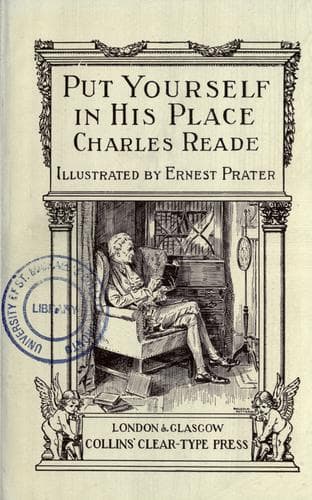
English fiction -- 19th century; Labor unions -- Fiction
“Yes, but Dr. Amboyne says dear Guy is deeply mortified by your refusal
to be his heir. For my sake, for your own sake, and for Grace Carden's
sake; change your mind now.”
“What, go into his house, and wait for dead men's shoes! Find myself
some day wishing in my heart that noble old fellow would die! Such a
life turns a man's stomach even to think of it.”
“No, no. Dr. Amboyne says that Mr. Bayne can conduct your business here,
and hand you a little income, without your meddling.”
“That is true.”
“And, as for your patents, gentlemen can sell them to traders, or lease
them out. My brother would make a settlement on Grace and you--she is
his goddaughter--now that is all Mr. Carden demands. Then you could
marry, and, on your small present income, make a little tour together;
and dispose of your patents in other places.”
“I could do great things with them in the United States.”
“That is a long way.”
“Why, it is only twelve days.”
“Well, marry first,” said the politic mother.
Henry flushed all over. “Ah!” said he, “you tempt me. Heaven seems to
open its gates as you speak. But you can not be in earnest; he made
it an express condition I should drop my father's name, and take his.
Disown my poor dead father? No, no, no!”
Now in reality this condition was wormwood to Mrs. Little; but she knew
that if she let her son see her feeling, all was over. She was all the
mother now, and fighting for her son's happiness: so she sacrificed
truth to love with an effort, but without a scruple. “It is not as if
it was a strange name. Henry, you compel me to say things that tear my
heart to say, but--which has been your best friend, your mother, or your
poor dear father?”
Henry was grieved at the question: but he was a man who turned his back
on nothing. “My father loved me,” said he: “I can remember that; but he
deserted me, and you, in trouble; but you--you have been friend, parent,
lover, and guardian angel to me. And, oh, how little I have done to
deserve it all!”
“Well, dear, the mother you value so highly, her name was Raby. Yes,
love; and, forgive me, I honor and love my mother's name even more
than I do the name of Little”--(the tears ran out of her eyes at this
falsehood)--“pray take it, to oblige me, and reconcile me to my dear
brother, and end our troubles forever.” Then she wept on his neck, and
he cried with her.
After a while, he said, “I feel my manhood all melting away together.
I am quite confused. It is hard to give up a noble game. It is hard to
refuse such a mother as you. Don't cry any more, for mercy's sake! I'm
like to choke. Mind, crying is work I'm not used to. What does SHE say?
I am afraid I shall win her, but lose her respect.”
“She says she admires your pride; but you have shown enough. If you
refuse any longer, she will begin to fear you don't love her as well as
she loves you.”
Public-domain text, read in full here on John Shaqi.
Reviews
Reviews
No reviews yet
Be the first to share your thoughts on this work.
Elsewhere in the archive
Join the Discussion
Join the discussion
Sign in to leave a comment or review.
Sign InorCreate an account