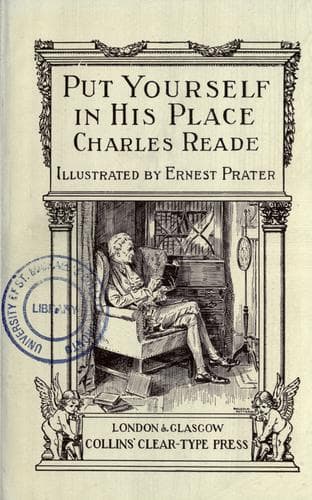
English fiction -- 19th century; Labor unions -- Fiction
“One question, dear: now the Union has beaten you, they will not be so
spiteful, will they?”
“Oh, no. That is all over. The conquerors can afford to be good-natured.
Confound them!”
“Then that is all I care about. Then do not leave Hillsborough. Why
should you? Wait here patiently. You do not know what may turn up.”
“What, mother, do YOU want to stay here now?” said Henry, opening his
eyes with astonishment.
“Wherever my son is happy and safe from harm, there I wish to stay--of
course.”
Next morning Henry called on Dr. Amboyne, and found him in his study,
teaching what looked a boy of sixteen, but was twenty-two, to read
monosyllables. On Little's entrance the pupil retired front his uphill
work, and glowered with vacillating eyes. The lad had a fair feminine
face, with three ill things in it: a want, a wildness, and a weakness.
To be sure Henry saw it at a disadvantage: for vivid intelligence would
come now and then across this mild, wild, vacant face, like the breeze
that sweeps a farm-yard pond.
“Good-morning, Little. This is your fellow-workman.”
“He does not look up to much,” said Henry, with all a workman's
bluntness.
“What, you have found him out! Never mind; he can beat the town at one
or two things, and it is for these we will use him. Some call him an
idiot. The expression is neat and vigorous, but not precise; so I have
christened him the Anomaly. Anomaly, this is Mr. Little; go and shake
hands with him, and admire him.”
The Anomaly went directly, and gazed into Little's face for some time.
He then made his report. “He is beautiful and black.”
Public-domain text, read in full here on John Shaqi.
Reviews
Reviews
No reviews yet
Be the first to share your thoughts on this work.
Elsewhere in the archive
Join the Discussion
Join the discussion
Sign in to leave a comment or review.
Sign InorCreate an account