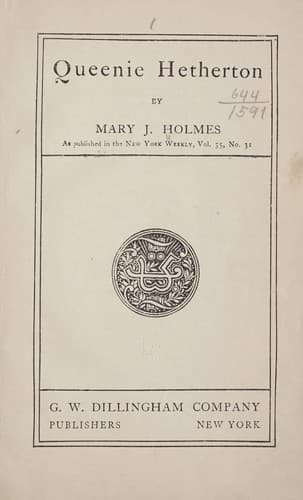
American fiction -- 19th century; Dime novels; Man-woman relationships -- Fiction; Upper class -- Fiction
not cost me a pang to do it I would say a word for Mr. Beresford. He
knows why I go away, for I told him, and like the splendid fellow he is,
he confessed what he said of me to you, and asked my pardon for it, and
I forgave him, and you must do so, too, and not be hot, and rash, and
bitter against him, as something tells me you may be, when you know I am
gone, and that possibly Mr. Beresford suggested to you the words which
made me go. He told me of your refusal of himself, but he hopes time may
change you; and if it does—oh, my darling, how can I say it, loving you
as I do?—if it does, don’t worry and tease him, but deal with him
honestly and openly, as a true woman should deal with a true, honest
man. And now, good-by, and if it is forever—if I never come back
again—remember that I love you always, always! and I shall carry your
image with me wherever I go, and so, in fancy, I put my arms around you
and hold you for a moment as my own, and kiss your dear face, feeling
sure that if it were really so, that I was saying good-by to you forever
and you knew it, you would kiss me back once at least, in token of all
we have been to each other.”
“Oh, Phil, Phil, yes, a thousand times would I kiss you, if you were
back again! and I am so sorry for the nasty words I said about your
idleness,” Reinette cried, as, with Phil’s letter clutched tightly in
her hand, she lay upon her face sobbing bitterly, and wondering what
life was worth to her now, that Phil was gone.
“I couldn’t marry him, I couldn’t, for he is my cousin!” she said; “and
I do not love him that way, but he was so much to me, how can I live
without him?”
And then there began to creep into her heart hot, resentful feelings
toward Mr. Beresford, who had put it into her mind to taunt Phil with
his idleness.
“I hate him—I hate him!” she said, stamping her little feet by way of
emphasis, but when she remembered that Phil had forgiven him, and still
held him as his friend, and wished her to do so, she grew more calm and
less resentful toward him, but declined to see him, when, next morning,
he rode over to Hetherton Place and asked for her.
“Tell him I am sick,” she said to Pierre, “and can see no one, unless it
is Margery. Ask him, please, to call at her door, and tell her to come
to me, for I am in great trouble.”
With a suspicion as to the nature of Queenie’s trouble, Mr. Beresford
rode back to town and delivered the message to Margery, who went at once
to her friend and tried to comfort her. But Queenie refused to be
comforted. Phil was gone, and what was there now for her?
“You can bring him back. The ship does not sail for some days you say,
and a word from you will change his mind,” Margery said, caressing the
bowed head resting on her lap.
“Do you think—do you believe he would come back, if I were to write and
beg him?” Queenie asked, quickly, lifting up her tear-stained face.
Public-domain text, read in full here on John Shaqi.
Reviews
Reviews
No reviews yet
Be the first to share your thoughts on this work.
Elsewhere in the archive
Join the Discussion
Join the discussion
Sign in to leave a comment or review.
Sign InorCreate an account