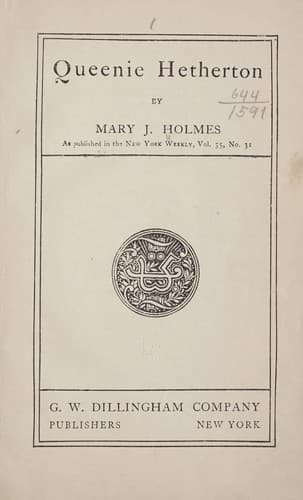
American fiction -- 19th century; Dime novels; Man-woman relationships -- Fiction; Upper class -- Fiction
But the hands which held the pot trembled, and the palms were wet with
great drops of sweat, as he went slowly to the room where his wife lay
in a swoon. He was a small man, and weak, too, it would seem, but it was
he who lifted the fainting woman up and bore her to her chamber and
loosened her dress, and took the diamonds from her throat and ears, and
the flowers from her hair, as quickly and skillfully as her daughters
could have done. There was a good deal of Phil in his nature, and he
showed it in his womanly and quiet manner at the sick bed.
“Poor Mary, I am so sorry for you,” he said, and pressed his lips to the
forehead of his wife, who clung to him as a child in pain clings to its
mother.
But there were no tears in his eyes, as the days passed by, no change in
his manner, as he went about his usual vocations and watered his ferns
and tended his orchids and picked off the dead leaves from the roses and
carnations, and smoked the lilies and roses on which insects were
gathering.
“Where have you been so long?” his wife asked him once, when he came to
her after an absence of more than an hour.
“Been watering my ferns,” was his reply, and with a half reproachful sob
his wife continued:
“Oh, Paul, how can you care for such things with Philip dead?”
“I don’t know, Mary” he answered, apologetically. “I am sorry if I have
done anything out of character; the little things seem so glad for the
water, and if I was to let every fern, and orchid, and pitcher-plant
die, it would not bring Philip back.”
Had he then no feeling, no sorrow for his son? Mrs. Rossiter almost
thought so; but that night waking suddenly from a quiet sleep, she
missed him from her side and raising herself in bed, saw him across the
room by the window, where the moonlight was streaming in, kneeling upon
the floor with his face buried in a pillow he had lain upon a chair, the
better to smother the sobs which seemed almost to rend his soul from his
body, they were so deep and pitiful.
“Phil, Phil, my boy, how can I live without him? I was so proud of him
and loved him so much. Oh, Phil, they think me cold and callous, because
I cannot talk and moan as others do, but God knows my bitter pain. God
help me, and Mary, too. Poor Mary, who was his mother, and loved him,
maybe, more than I did. God comfort her and help her to bear, no matter
what I suffer.”
This was what Mrs. Rossiter heard, and in a moment she was beside the
prostrate man—her arms were around his neck, and his bowed head was laid
against her bosom, while she kissed his quivering lips again and again,
as she said to him:
“Forgive me, Paul, if I have been so selfish in my own grief as not to
see how you, too, have suffered. Phil was our own boy, Paul; we loved
him together, we will mourn for him together, and comfort each other,
and love each other better because we have lost him.”
Public-domain text, read in full here on John Shaqi.
Reviews
Reviews
No reviews yet
Be the first to share your thoughts on this work.
Elsewhere in the archive
Join the Discussion
Join the discussion
Sign in to leave a comment or review.
Sign InorCreate an account