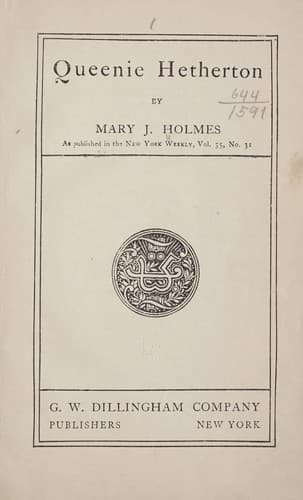
American fiction -- 19th century; Dime novels; Man-woman relationships -- Fiction; Upper class -- Fiction
Here Christine paused, and with closed eyes and clenched fists seemed to
be living over again the scenes she had described, while Reinette raised
herself from her reclining position in the chair, and winding her arms
tightly around Margery’s neck, rested her cheek upon the bowed head, and
said:
“Well, Christine, you have let me see one side of the picture, have
shown me myself, surrounded with riches and love, and sunshine and
flowers, to which I had no right. Now show me the other side; take me to
the garret where Margie, to whom belonged the sunshine and the flowers,
was struggling with cold and hunger, and shrinking it may be, from harsh
words and cruel blows.”
“No, Queenie, never,” Margery exclaimed. “Never hunger or cold or blows
or harsh words. The woman who cared for me was always kind, and my
childhood was a happy one, for I knew no other life, and the children of
poverty are as much pleased with a toy which costs a penny as are the
children of the rich with one which costs many francs; and after mother
came and took me to live with her, I was very happy, for if she
defrauded me of my birthright, she made it up in love and tender care.”
Margery’s generous defense of the woman who had wronged her so deeply,
touched Queenie, and her voice was softer and her manner less imperious
as she continued: “I know she loved you, Margie—know she has been kind
to you, and I thank her for it; but I wish to hear about it all the
same—wish to know where you lived, and how, after she left Chateau des
Fleurs and went back to you. Tell me, please,” and she turned to
Christine: “tell me of Margie when she was a baby.”
Public-domain text, read in full here on John Shaqi.
Reviews
Reviews
No reviews yet
Be the first to share your thoughts on this work.
Elsewhere in the archive
Join the Discussion
Join the discussion
Sign in to leave a comment or review.
Sign InorCreate an account