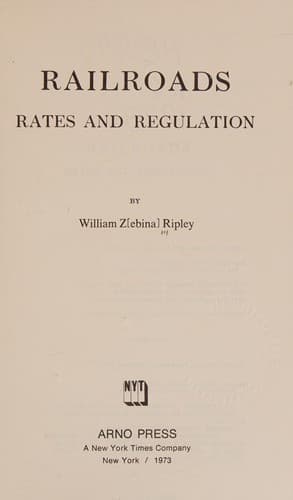
Railroads: Rates and RegulationsRipley, William Zebina
History
Railroads: Rates and Regulations
Ripley, William Zebina
Railroads -- Freight -- Rates -- United States; Railroads and state -- United States
The Elkins law of 1903 not only came at a time when the carriers were
in need of every cent of revenue to tide over a hard year, but it also
followed demonstration under the test of judicial procedure, that
convictions for rebating were practically impossible under the old
law. To convict for unjust discrimination it was necessary to show,
not merely the allowance to one favored shipper, but the fact also had
to be proved that no such allowances were made to others on the same
sort of traffic under similar conditions. This could scarcely ever be
done. In fact, during almost twenty years, there had been less than
a score of convictions. Most of the prosecutions had failed utterly.
Both government and carriers pressed for legislation. This was promptly
given in the Act of February 19, 1903. There were four important
features of this law. Railway corporations, not merely individuals as
before, were now made directly liable to prosecution and penalties. The
tariff filed became the lawful standard. The fact that all shippers got
the same low rate was, therefore, no longer a defence. In the third
place, the shipper as well as the carrier could be held accountable. In
other words, accepting as well as giving rebates, became unlawful. And,
finally, jurisdiction was conferred upon the Federal courts to restrain
any departure from published rates or any "discrimination forbidden
by law" by writ of injunction. This fully legalized a rather doubtful
course of procedure to which the Interstate Commerce Commission had
been compelled to resort as a last weapon in the rate wars on grain and
beef since 1901. It also abolished the penalty of adjustment; imposing
fines instead. But this action was subsequently rescinded in the law
of 1906.
Public-domain text, read in full here on John Shaqi.
Reviews
Reviews
No reviews yet
Be the first to share your thoughts on this work.
Elsewhere in the archive
Join the Discussion
Join the discussion
Sign in to leave a comment or review.
Sign InorCreate an account