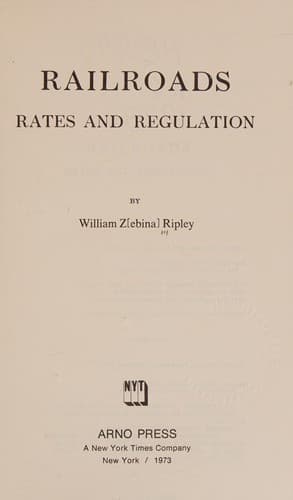
Railroads: Rates and RegulationsRipley, William Zebina
History
Railroads: Rates and Regulations
Ripley, William Zebina
Railroads -- Freight -- Rates -- United States; Railroads and state -- United States
The natural growth of classification in a rapidly developing country
like the United States, has manifested itself in three distinct ways:
there has been a steady increase in the number of items of freight
separately enumerated; a growing distinction in rates between carload
and less-than-carload shipments; and a steadily enlarging volume of
the most elaborate special rules and descriptions. As for the mere
increase in distinct commodities enumerated, in the East in 1886
there had come to be about 1,000. The first Official Classification
in the following year increased to 2,800 items; and by 1893, in the
eleventh issue, there were twice that number. The latest Official
Classification, No. 34 in 1909, contained approximately 6,000 separate
enumerations--not many more, in fact, than fifteen years earlier.
The point of saturation, or else the limit of human ingenuity, seems
to have been about reached some years ago. The same thing was true
of the Western Classification. In 1893 this contained 3,658 items,
representing an increase of about 2,000 over the number of commodities
classified by name in 1886. By 1909, as the above figures show, it
comprehended 5,729, almost as many separate items, in fact, for
less-than-carload lots as were recognized in trunk line territory.
Only in carload ratings is the Western Classification less extensive.
The Southern Classification reflected somewhat simpler trade conditions
prevalent south of the Ohio river, by the relatively smaller number
of articles enumerated; but it should be added that the number of
exceptions--filling no less than 160 pages in the latest issue--is
indicative throughout of a lesser degree of standardization than is
found elsewhere. Perhaps the most striking feature of the southern
system is the very small proportion of carload rates. But it should
be noted in this connection that the basing point system afforded
preference to market towns in any event; so that jobbers in such places
did not need wholesale rates to the same degree. This phase of the
matter will be elsewhere discussed.[326]
Public-domain text, read in full here on John Shaqi.
Reviews
Reviews
No reviews yet
Be the first to share your thoughts on this work.
Elsewhere in the archive
Join the Discussion
Join the discussion
Sign in to leave a comment or review.
Sign InorCreate an account