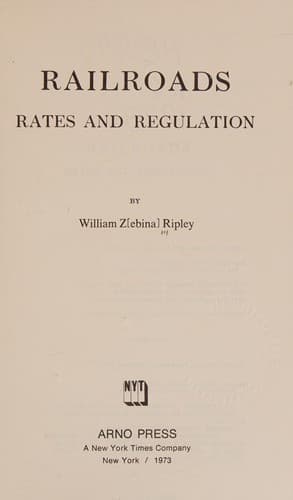
Railroads: Rates and RegulationsRipley, William Zebina
History
Railroads: Rates and Regulations
Ripley, William Zebina
Railroads -- Freight -- Rates -- United States; Railroads and state -- United States
The problem of mixed carloads, also, is a difficult one to adjust
to the needs of primary and secondary distributing points.[364] It
is oftentimes of vital importance to a small jobber to be able to
make up a carload of miscellaneous packages. His business may not
be large enough to permit him to enjoy the advantage of a carload
rate on any single commodity. Or the independent meat packer may be
greatly benefited by a rule which permits him to bulk his soap and
other by-products with other goods in securing a wholesale rate. Why
may a paper manufacturer not combine paper bags and wrapping paper
in one territory as well as another? In this regard the rules in the
West and South are naturally much less liberal than in the East. The
privilege of mixture has been given only to a limited extent to jobbing
and manufacturing centres by means of commodity tariffs. Such mixture
is usually restricted to analogous articles, such as agricultural
implements, furniture or commodities intended to serve a joint purpose.
The recent bitter protest against the discontinuance of the right to
ship binder twine with agricultural implements is a case in point. On
the other hand, eastern railways are a unit in opposing the bulking
of separate shipments in carloads when owned by different shippers.
The western and southern roads do not specially forbid it. All such
differences come to the fore in any attempt to unify the practice of
all the carriers of the country under a single set of regulations.
* * * * *
Public-domain text, read in full here on John Shaqi.
Reviews
Reviews
No reviews yet
Be the first to share your thoughts on this work.
Elsewhere in the archive
Join the Discussion
Join the discussion
Sign in to leave a comment or review.
Sign InorCreate an account