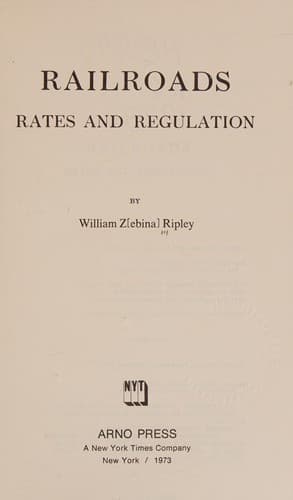
Railroads: Rates and RegulationsRipley, William Zebina
History
Railroads: Rates and Regulations
Ripley, William Zebina
Railroads -- Freight -- Rates -- United States; Railroads and state -- United States
This grouping under the new law of 1906 has been somewhat
redistributed. But inasmuch as most of the statistical data as yet
available is presented under the above-named heads, we shall adhere to
that classification. This we may the more properly do, as our object
is to show the general bearing of railroad expenditures upon rate
making, rather than specifically to analyze cost accounts. For this
simple purpose the above arrangement is entirely adequate.
The general nature of each of these above named groups is roughly
expressed by its title. Under the first, Maintenance of Way, are
segregated those outlays which have to do with the up-keep of the
roadway and permanent structures in proper shape for the moving of
trains. It includes, besides such obvious items as ballast, rails, ties
and the wages of track men, every outlay on permanent structures, such
as bridges and tunnels, stations, grain elevators, stock pens, gas, oil
and water tanks, and even scrap bins and eating houses. To these are
added scores of other minor items, such as maintenance of telegraph
lines, fences and cattle guards, signal plants and docks and wharves.
Every kind of tool or appliance used, and all wages paid in connection
with the maintenance of this part of the property are included.
Insurance and even the legal costs and damages incurred in connection
with accidents, are all assigned to the appropriate property. The
second group, Maintenance of Equipment expenses, includes, as the name
implies, the proper care and preservation of all the rolling stock
in good working order. Repairs and renewals of all locomotives, cars
and vessels, form the largest single items. But all shop machinery
and power plants are included, with specification in detail of every
appliance needed in connection with the work, as, for example, over
one hundred and fifty possible items from "adze handles, ammonia and
auger bits" down to "wire brushes, wrenches and zincs." Conducting
Transportation expenses, the third group, are supposed to provide for
the actual movement of traffic. The two former classes of expenditure
having put the fixed plant and rolling stock in condition, it remains
to operate the property. Under this head is chargeable all costs of
coal and supplies, wages of train hands from enginemen to car porters,
yard, station, switch and signalmen and telegraph operators. To these
are added such items as "purchased power," "cleaning cars," "clearing
wrecks," and "losses and damages"; in short, every conceivable item of
expenditure which can be assigned to the service as distinct from the
mere property.
Public-domain text, read in full here on John Shaqi.
Reviews
Reviews
No reviews yet
Be the first to share your thoughts on this work.
Join the Discussion
Join the discussion
Sign in to leave a comment or review.
Sign InorCreate an account