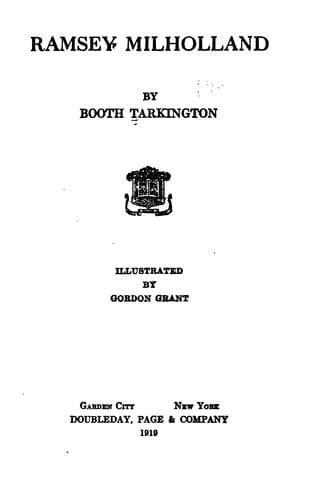
American fiction -- 20th century; Bildungsromans; World War, 1914-1918 -- United States -- Fiction; Young men -- Fiction
They gathered upon the sandy banks of a creek, in the blue shade of big,
patchy-barked sycamores, with a dancing sky on top of everything and
gold dust atwinkle over the water. Hither the napkin-covered baskets
were brought from the wagons and assembled in the shade, where they
appeared as an attractive little meadow of white napery, and gave both
surprise and pleasure to communities of ants and to other original
settlers of the neighbourhood.
From this nucleus or headquarters of the picnic, various expeditions
set forth up and down the creek and through the woods that bordered it.
Camera work was constant; spring wild flowers were accumulated by groups
of girls who trooped through the woods with eager eyes searching the
thickets; two envied boy fishermen established themselves upon a bank
up-stream, with hooks and lines thoughtfully brought with them, and
poles which they fashioned from young saplings. They took mussels from
the shallows, for bait, and having gone to all this trouble, declined
to share with friends less energetic and provident the perquisites and
pleasures secured to themselves.
Albert Paxton was another person who proved his enterprise. Having
visited the spot some days before, he had hired for his exclusive use
throughout the duration of the picnic an old rowboat belonging to a
shanty squatter; it was the only rowboat within a mile or two and Albert
had his own uses for it. Albert was the class lover and, after first
taking the three chaperon teachers “out for a row,” an excursion
concluded in about ten minutes, he disembarked them; Sadie Clews stepped
into the boat, a pocket camera in one hand, a tennis racket in the
other; and the two spent the rest of the day, except for the luncheon
interval, solemnly drifting along the banks or grounded on a shoal. Now
and then Albert would row a few strokes, and at almost any time when the
populated shore glanced toward them, Sadie would be seen photographing
Albert, or Albert would be seen photographing Sadie, but the tennis
racket remained an enigma. Oarsman and passenger appeared to have no
conversation whatever--not once was either seen or heard to address a
remark to the other; and they looked as placid as their own upside-down
reflections in one of the still pools they slowly floated over. They
were sixteen, and had been “engaged” more than two years.
Public-domain text, read in full here on John Shaqi.
Reviews
Reviews
No reviews yet
Be the first to share your thoughts on this work.
Join the Discussion
Join the discussion
Sign in to leave a comment or review.
Sign InorCreate an account