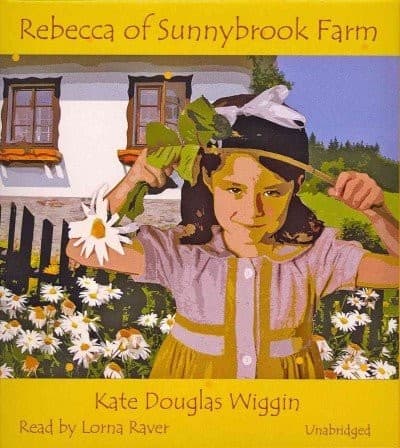
Rebecca of Sunnybrook FarmWiggin, Kate Douglas Smith
General
Rebecca of Sunnybrook Farm
Wiggin, Kate Douglas Smith
Aunts -- Juvenile fiction; Girls -- Juvenile fiction; New England -- Juvenile fiction
"Not so very," confessed Rebecca; "but it's hard to tell all by
yourself. The Perkinses and the Cobbs always said they were wonderful,
but when Mrs. Cobb told me she thought they were better than Mr.
Longfellow's I was worried, because I knew that couldn't be true."
This ingenuous remark confirmed Miss Maxwell's opinion of Rebecca as a
girl who could hear the truth and profit by it.
"Well, my child," she said smilingly, "your friends were wrong and you
were right; judged by the proper tests, they are pretty bad."
"Then I must give up all hope of ever being a writer!" sighed Rebecca,
who was tasting the bitterness of hemlock and wondering if she could
keep the tears back until the interview was over.
"Don't go so fast," interrupted Miss Maxwell. "Though they don't amount
to anything as poetry, they show a good deal of promise in certain
directions. You almost never make a mistake in rhyme or metre, and this
shows you have a natural sense of what is right; a 'sense of form,'
poets would call it. When you grow older, have a little more
experience,--in fact, when you have something to say, I think you may
write very good verses. Poetry needs knowledge and vision, experience
and imagination, Rebecca. You have not the first three yet, but I
rather think you have a touch of the last."
"Must I never try any more poetry, not even to amuse myself?"
"Certainly you may; it will only help you to write better prose. Now
for the first composition. I am going to ask all the new students to
write a letter giving some description of the town and a hint of the
school life."
"Shall I have to be myself?" asked Rebecca.
"What do you mean?"
"A letter from Rebecca Randall to her sister Hannah at Sunnybrook Farm,
or to her aunt Jane at the brick house, Riverboro, is so dull and
stupid, if it is a real letter; but if I could make believe I was a
different girl altogether, and write to somebody who would be sure to
understand everything I said, I could make it nicer."
"Very well; I think that's a delightful plan," said Miss Maxwell; "and
whom will you suppose yourself to be?"
"I like heiresses very much," replied Rebecca contemplatively. "Of
course I never saw one, but interesting things are always happening to
heiresses, especially to the golden-haired kind. My heiress wouldn't be
vain and haughty like the wicked sisters in Cinderella; she would be
noble and generous. She would give up a grand school in Boston because
she wanted to come here where her father lived when he was a boy, long
before he made his fortune. The father is dead now, and she has a
guardian, the best and kindest man in the world; he is rather old of
course, and sometimes very quiet and grave, but sometimes when he is
happy, he is full of fun, and then Evelyn is not afraid of him. Yes,
the girl shall be called Evelyn Abercrombie, and her guardian's name
shall be Mr. Adam Ladd."
"Do you know Mr. Ladd?" asked Miss Maxwell in surprise.
Public-domain text, read in full here on John Shaqi.
Reviews
Reviews
No reviews yet
Be the first to share your thoughts on this work.
Elsewhere in the archive
Join the Discussion
Join the discussion
Sign in to leave a comment or review.
Sign InorCreate an account