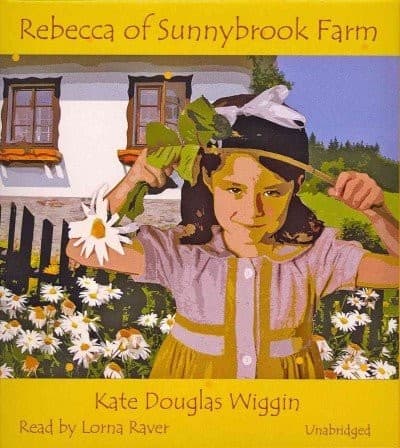
Rebecca of Sunnybrook FarmWiggin, Kate Douglas Smith
General
Rebecca of Sunnybrook Farm
Wiggin, Kate Douglas Smith
Aunts -- Juvenile fiction; Girls -- Juvenile fiction; New England -- Juvenile fiction
Nobody seemed possessed of exact information with which to satisfy the
hungry mind, but there was believed to be at least one person in
existence who had seen, with his own eyes, an essay by Miss Maxwell in
a magazine. This height of achievement made Rebecca somewhat shy of
her, but she looked her admiration; something that most of the class
could never do with the unsatisfactory organs of vision given them by
Mother Nature. Miss Maxwell's glance was always meeting a pair of eager
dark eyes; when she said anything particularly good, she looked for
approval to the corner of the second bench, where every shade of
feeling she wished to evoke was reflected on a certain sensitive young
face.
One day, when the first essay of the class was under discussion, she
asked each new pupil to bring her some composition written during the
year before, that she might judge the work, and know precisely with
what material she had to deal. Rebecca lingered after the others, and
approached the desk shyly.
"I haven't any compositions here, Miss Maxwell, but I can find one when
I go home on Friday. They are packed away in a box in the attic."
"Carefully tied with pink and blue ribbons?" asked Miss Maxwell, with a
whimsical smile.
"No," answered Rebecca, shaking her head decidedly; "I wanted to use
ribbons, because all the other girls did, and they looked so pretty,
but I used to tie my essays with twine strings on purpose; and the one
on solitude I fastened with an old shoelacing just to show it what I
thought of it!"
"Solitude!" laughed Miss Maxwell, raising her eyebrows. "Did you choose
your own subject?"
"No; Miss Dearborn thought we were not old enough to find good ones."
"What were some of the others?"
"Fireside Reveries, Grant as a Soldier, Reflections on the Life of P.
T. Barnum, Buried Cities; I can't remember any more now. They were all
bad, and I can't bear to show them; I can write poetry easier and
better, Miss Maxwell."
"Poetry!" she exclaimed. "Did Miss Dearborn require you to do it?"
"Oh, no; I always did it even at the farm. Shall I bring all I have? It
isn't much."
Rebecca took the blank-book in which she kept copies of her effusions
and left it at Miss Maxwell's door, hoping that she might be asked in
and thus obtain a private interview; but a servant answered her ring,
and she could only walk away, disappointed.
A few days afterward she saw the black-covered book on Miss Maxwell's
desk and knew that the dreaded moment of criticism had come, so she was
not surprised to be asked to remain after class.
The room was quiet; the red leaves rustled in the breeze and flew in at
the open window, bearing the first compliments of the season. Miss
Maxwell came and sat by Rebecca's side on the bench.
"Did you think these were good?" she asked, giving her the verses.
Public-domain text, read in full here on John Shaqi.
Reviews
Reviews
No reviews yet
Be the first to share your thoughts on this work.
Elsewhere in the archive
Join the Discussion
Join the discussion
Sign in to leave a comment or review.
Sign InorCreate an account