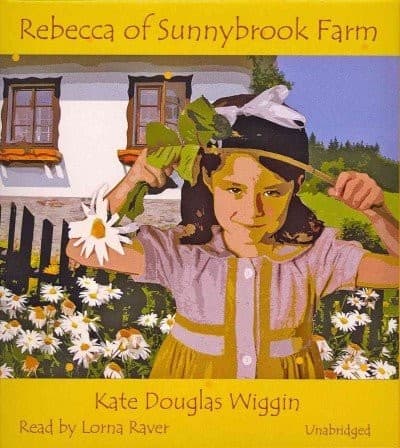
Rebecca of Sunnybrook FarmWiggin, Kate Douglas Smith
General
Rebecca of Sunnybrook Farm
Wiggin, Kate Douglas Smith
Aunts -- Juvenile fiction; Girls -- Juvenile fiction; New England -- Juvenile fiction
Rebecca's joy knew no bounds. "I'll baste like a house afire!" she
exclaimed. "It's a thousand yards round that skirt, as well I know,
having hemmed it; but I could sew pretty trimming on if it was from
here to Milltown. Oh! do you think aunt Mirandy'll ever let me go to
Milltown with Mr. Cobb? He's asked me again, you know; but one Saturday
I had to pick strawberries, and another it rained, and I don't think
she really approves of my going. It's TWENTY-NINE minutes past four,
aunt Jane, and Alice Robinson has been sitting under the currant bushes
for a long time waiting for me. Can I go and play?"
"Yes, you may go, and you'd better run as far as you can out behind the
barn, so 't your noise won't distract your aunt Mirandy. I see Susan
Simpson and the twins and Emma Jane Perkins hiding behind the fence."
Rebecca leaped off the porch, snatched Alice Robinson from under the
currant bushes, and, what was much more difficult, succeeded, by means
of a complicated system of signals, in getting Emma Jane away from the
Simpson party and giving them the slip altogether. They were much too
small for certain pleasurable activities planned for that afternoon;
but they were not to be despised, for they had the most fascinating
dooryard in the village. In it, in bewildering confusion, were old
sleighs, pungs, horse rakes, hogsheads, settees without backs,
bed-steads without heads, in all stages of disability, and never the
same on two consecutive days. Mrs. Simpson was seldom at home, and even
when she was, had little concern as to what happened on the premises. A
favorite diversion was to make the house into a fort, gallantly held by
a handful of American soldiers against a besieging force of the British
army. Great care was used in apportioning the parts, for there was no
disposition to let anybody win but the Americans. Seesaw Simpson was
usually made commander-in-chief of the British army, and a limp and
uncertain one he was, capable, with his contradictory orders and his
fondness for the extreme rear, of leading any regiment to an inglorious
death. Sometimes the long-suffering house was a log hut, and the brave
settlers defeated a band of hostile Indians, or occasionally were
massacred by them; but in either case the Simpson house looked, to
quote a Riverboro expression, "as if the devil had been having an
auction in it."
Public-domain text, read in full here on John Shaqi.
Reviews
Reviews
No reviews yet
Be the first to share your thoughts on this work.
Join the Discussion
Join the discussion
Sign in to leave a comment or review.
Sign InorCreate an account